Most fire jobs cost more than the burned part of a house suggests. Smoke drifts into rooms that never saw flame, hose water soaks the framing, and old wiring has to meet today’s code. Our team at Anderson Restoration has handled fire damage restoration work across the North and West Houston metro since 2002.
The same six line items catch folks off guard. Let’s pull them into the open before you sign a scope of work.
Why does the bill grow after the flames are out?
The bill grows because flame is only one of three problems in the house. Hose water spreads fast. Soot rides the air and the HVAC system into closets, drawers, and attic space nobody thought to check. Then the rebuild has to pass inspection under current code, not the code from the year the house went up.
So a quick walkthrough number rarely holds. Crews find the rest once drywall comes down, which is why we walk clients through the fire restoration process on day one. Good news, though. Most of it is predictable if you know where to look.
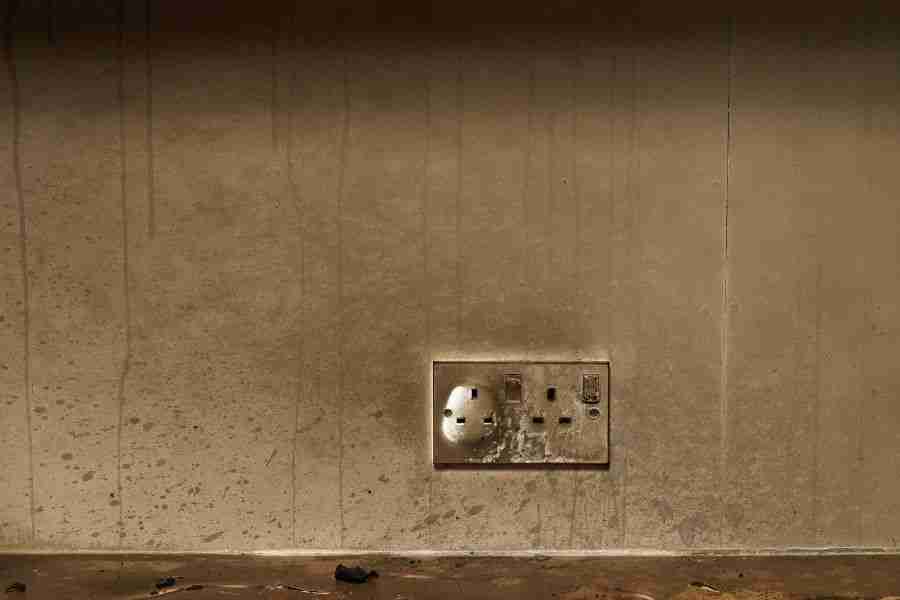
Soot travels through outlets, switch plates, and wall cavities, so cleaning stops well past where the flames did.
The 6 hidden costs in fire damage restoration projects
Six costs show up on nearly every fire job, and none of them are the flames. Hose water, lingering odor, contents pack-out, a place to sleep, code upgrades, and the gap between what got damaged and what gets paid. Each one is normal. Each one is easier to swallow when you see it coming.
1. Hose water and the drying that follows
Firefighters use a lot of water, and it goes where gravity takes it. Ceilings hold it and insulation holds more. So emergency water extraction and structural drying usually runs beside the smoke work, with meters and fans on site for days. Skip it and mold can show up in a Houston summer within two days.
2. Smoke odor that keeps coming back
Odor hides in porous stuff. Framing, insulation, duct lining, subfloor. A quick fogging masks it for about a week. Real odor work follows the IICRC S700 standard for fire and smoke jobs, so crews clean what can be saved, seal what stays, and haul out what can’t be cleaned.
Smoke and water don’t wait for a claim to settle. Our IICRC certified crew answers calls day and night across the Houston metro.
3. Pack-out, cleaning, and storage of your stuff
Your belongings are their own project. Clothes, photos, furniture, and electronics get counted, boxed, cleaned, and stored while the house is a work zone. Our content pack-out service covers that, usually under a separate policy limit. Textiles and electronics go to specialty partners, and honestly, not every single item makes it back.

Every box gets logged, since contents ride on their own coverage limit.
4. A place to sleep while the work happens
Nobody wants to sleep in a house that smells like a campfire. Loss of use coverage helps with a rental, meals, pet boarding, and a longer drive to work. Keep every receipt, since adjusters pay for what you can prove. Plan on a longer stay than you’d expect.
5. Code upgrades the rebuild sets off
Open walls mean an inspector sees everything. Older homes here often need new wiring, hard-wired smoke alarms, or added insulation before a permit closes. Some policies handle this under ordinance or law coverage. Many don’t, and when that happens the upgrade lands on the homeowner rather than the claim.
6. The gap between damaged and paid
Your deductible is the obvious piece. Less obvious are held-back depreciation, contents limits, and items an adjuster marks cleanable when our crew knows better. Photos of every room settle those talks fast. The USFA guide to life after a fire lists what to write down first.
How do you build a fire budget that holds?
Build the budget around a few checks, not one number. Read your policy limits, take photos before cleanup starts, and ask which of these six costs are already inside the scope. Ten minutes of questions now beats a change order in week five.
Quick reference by cost type
| Hidden cost | Why it shows up | Who carries it |
|---|---|---|
| Hose water | Water spreads past the burn | Same claim |
| Odor and soot | Smoke rides air and ducts | Policy, if scoped right |
| Pack-out | Home is not safe for stuff | Contents limit |
| Code upgrades | Permits follow today’s rules | Ordinance coverage, or you |
- Find three numbers in your policy: deductible, contents limit, loss of use.
- Photograph every room and drawer before anything moves.
- Ask your agent about ordinance or law coverage.
- Get the scope in writing, with drying, cleaning, and rebuild split out.
- Ask what ships out to specialty partners.
- Save receipts for hotels, meals, laundry, and pet boarding.

An hour with your policy is the cheapest hour of the whole project.
Fires are messy and claims are messier. Anderson Restoration has walked Houston metro families through both since 2002, from the first walkthrough to the last coat of paint. Restoring Lives One Project At A Time.
Fire restoration budget questions we hear a lot
Fire budgets usually go sideways in three spots: policy limits, the timeline, and DIY cleaning that has to be redone. These are the questions homeowners ask us most in the days right after a fire.
Does homeowners insurance cover every fire restoration cost?
Almost never all of it. Your deductible comes out first, contents and loss of use sit under separate limits, and part of the payout is held back until work wraps. Code upgrades are the usual surprise, since they need ordinance or law coverage.
How long does the cleanup and rebuild take?
Drying takes days, soot and odor work takes a week or two, and the rebuild is the long stretch. Permits and specialty cleaning add more. We give a range once walls are open, since that’s when the real scope shows up.
Can I clean smoke damage myself and save money?
Light soot on hard surfaces, sure, with a good mask and gloves. Porous materials and HVAC ducts are a different story, since scrubbing wrong drives residue deeper. If you spot the signs you need fire damage repair, get eyes on it first.