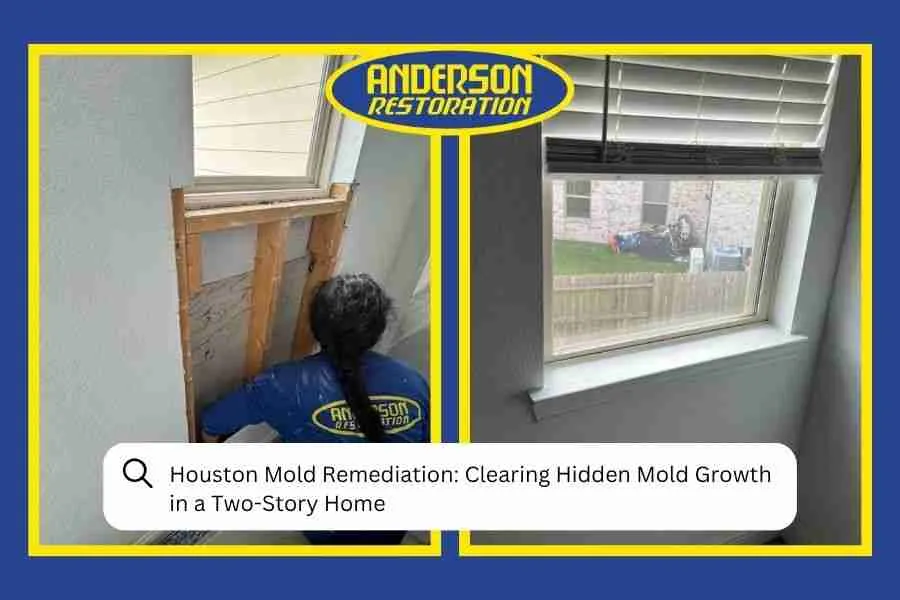
A Houston homeowner gave us a call after spotting a dark streak along one of their window sills. They figured it was a quick wipe-and-bleach job. Twenty minutes, max. Then they took a closer look, found the same growth in three other rooms, and noticed a thin black line crawling along a downstairs baseboard. That’s when they reached out for Houston mold remediation. What our team found in that two-story home turned a small cleanup into one of the more involved residential mold jobs we’ve worked on this year.
A Stain on the Windowsill That Was Hiding a Bigger Problem
On a quick visual inspection, the mold looked surface-level. A few stains around the window jambs and sills, easy enough to scrub away. But once we ran moisture readings into the framing, the real picture came together. Water had been migrating through the window assemblies for months, maybe longer, feeding active colonies behind the drywall on both floors of the home.
The pattern was textbook for older Houston homes with worn window flashing. Every storm and every humid stretch (around here, that’s most of the year) pushes more moisture into the wall cavity. Insulation soaks it up. Drywall absorbs it. And mold, given 24 to 48 hours of damp conditions, gets to work.
You don’t always see it from the outside. By the time visible growth shows up on a sill, there’s usually a much bigger colony hiding behind the wall.
What we found on the first walkthrough: visible mold along the upstairs window jamb, corner sill damage, and growth working its way along the baseboard and carpet edge downstairs.
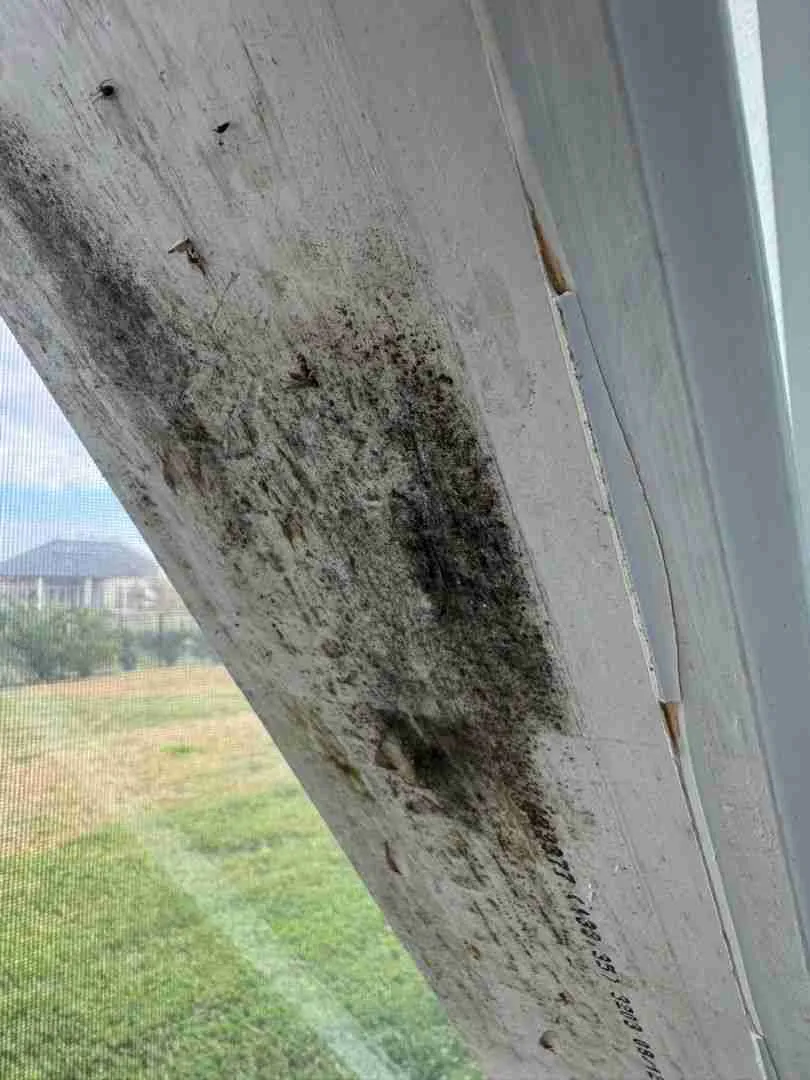 | 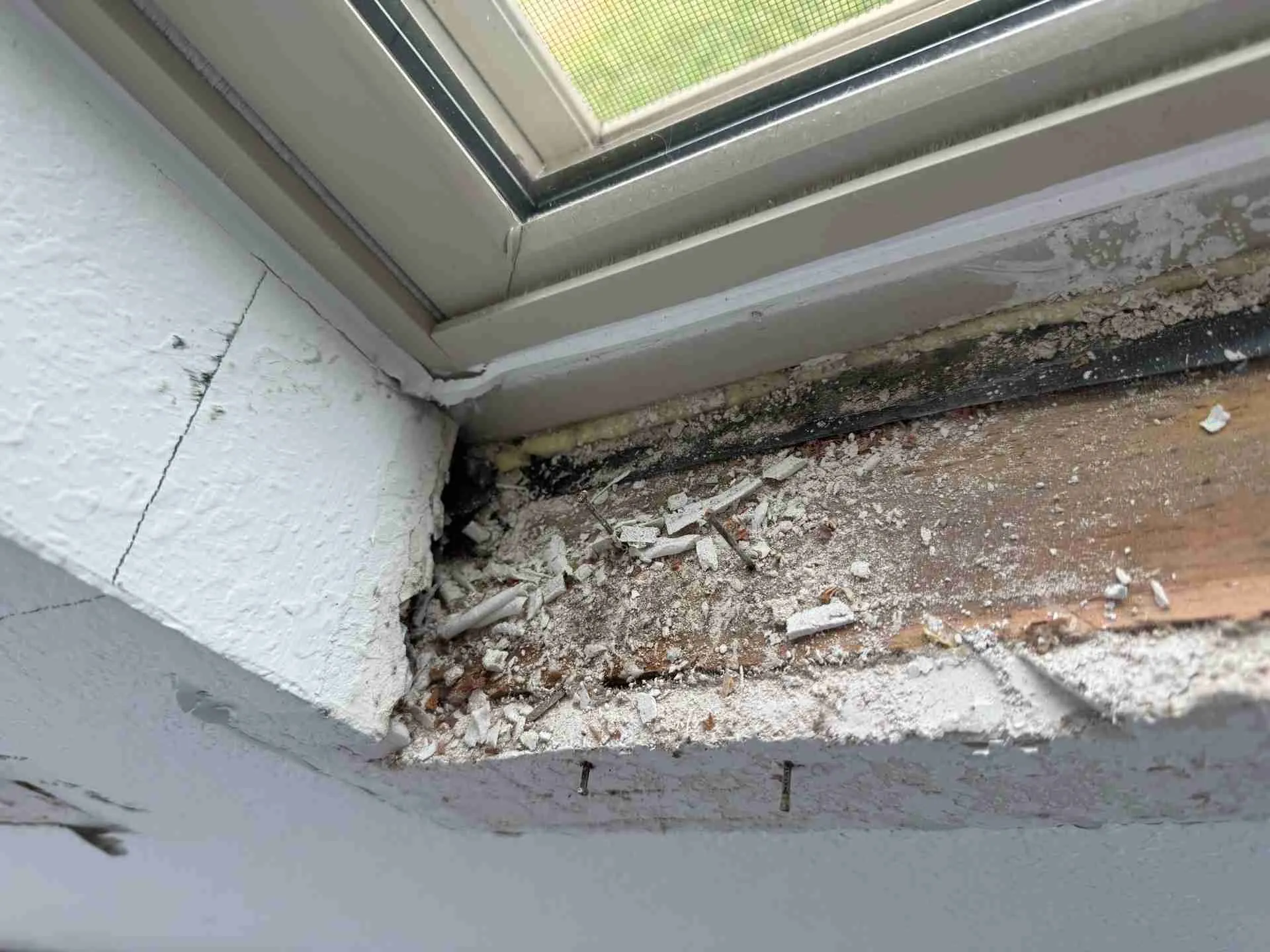 | 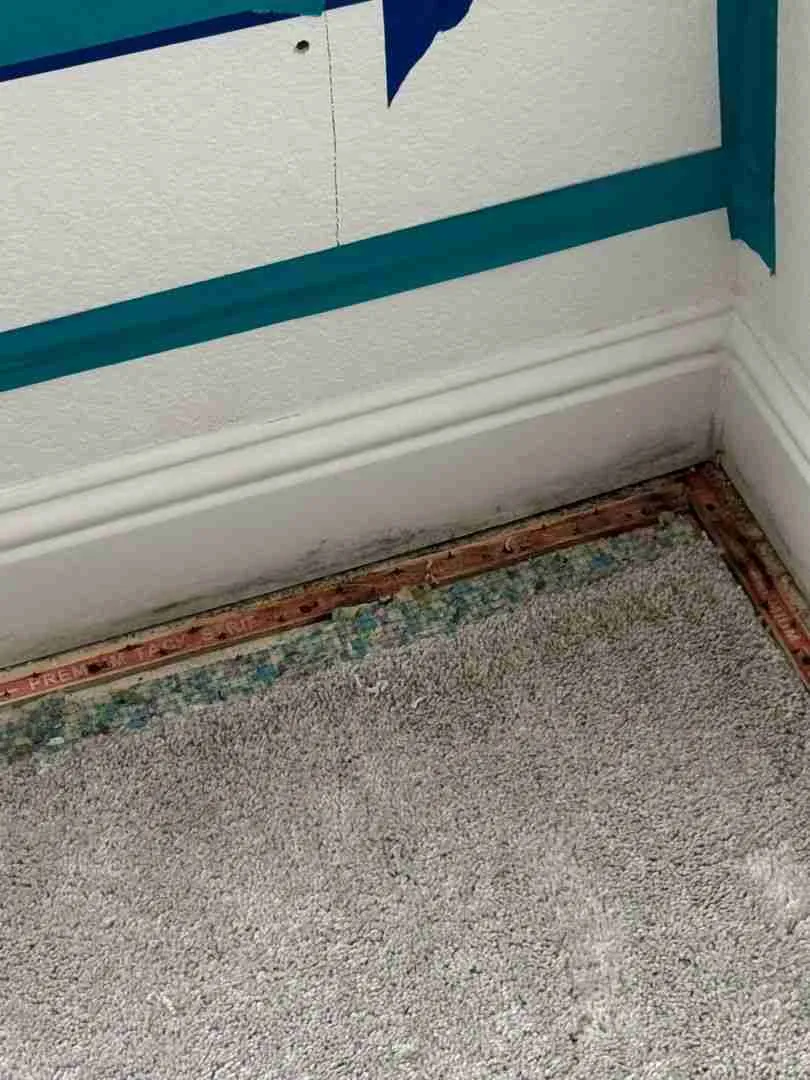 |
Containment First, Always
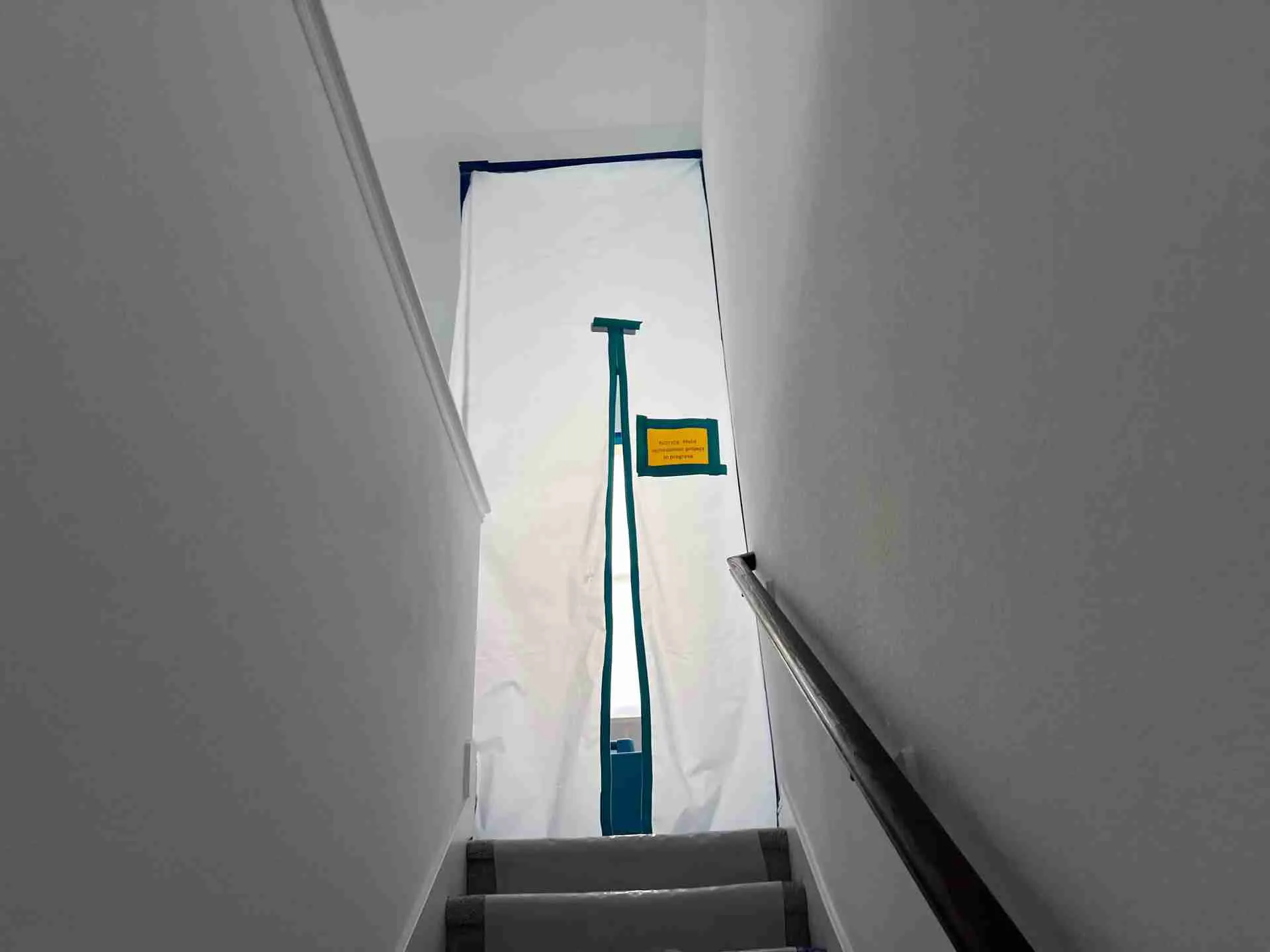
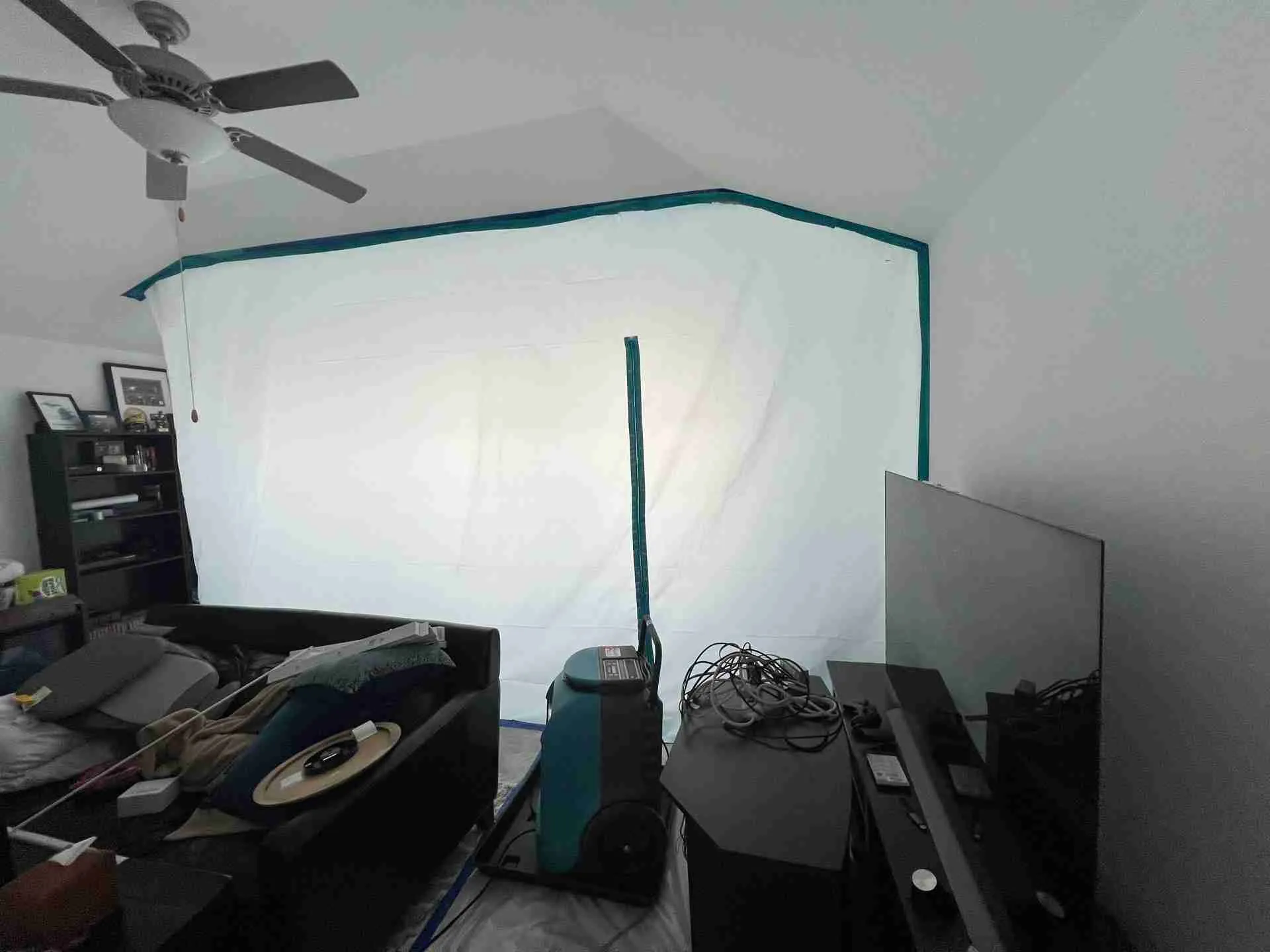
Before we touched a single piece of drywall, we set up negative-pressure containment around every affected room. Heavy plastic at doorways, sealed seams, regulatory mold-remediation notices posted at every entry, and HEPA air scrubbers running continuously through the work zones. The stairwell got its own barrier to stop spores from traveling between floors.
This part of the job isn’t optional and it isn’t dramatic. It’s the difference between fixing one room and contaminating an entire house.
Why we follow the IICRC protocol
Anderson Restoration is IICRC-certified, which means we work to the published IICRC S520 standard for mold remediation. The S520 covers everything from initial assessment through clearance, with specific rules around containment, PPE, air filtration, and disposal. The reason it exists is simple: mold work done sloppily makes the problem worse, not better.
The CDC’s guidance on mold and indoor air quality backs this up. Disturbing mold without containment is one of the fastest ways to spread spores into rooms that were never affected. Our crew suits up, the room gets sealed, and the air gets filtered before any cutting starts.
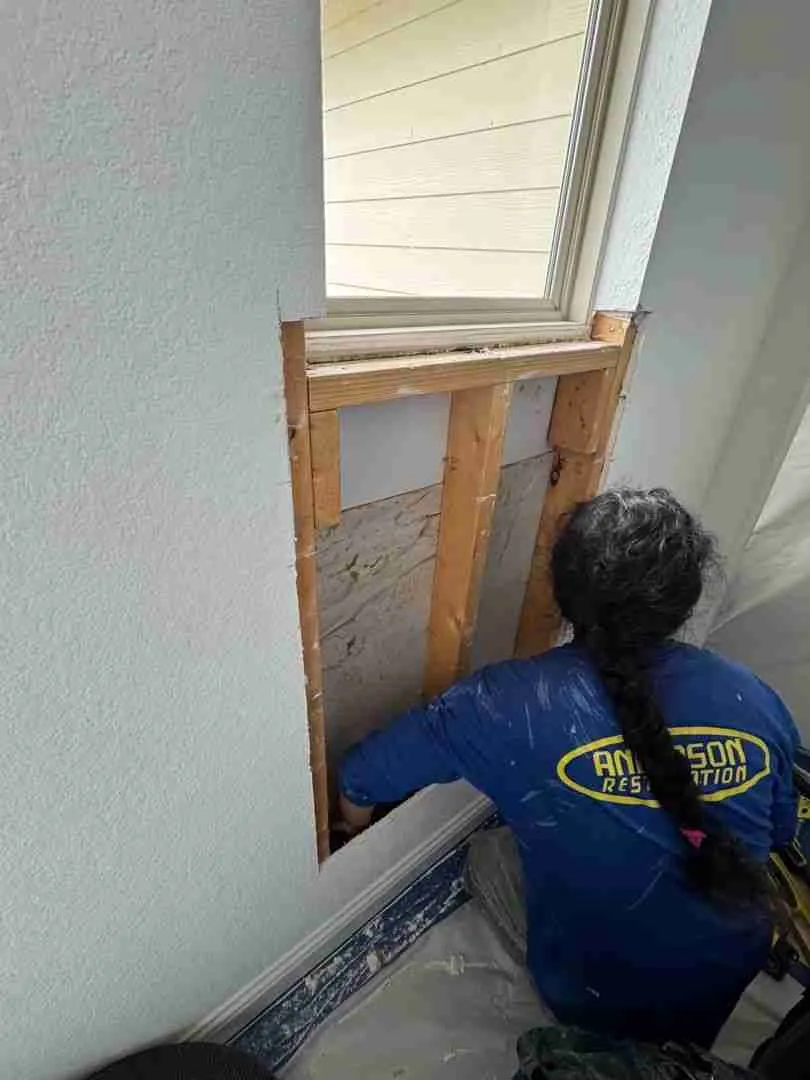
Containment in place, scrubbers running, and a technician carefully opening the wall cavity to assess hidden damage behind the window framing.
 |  |  |
Demo, HEPA Cleaning, and Antimicrobial Treatment
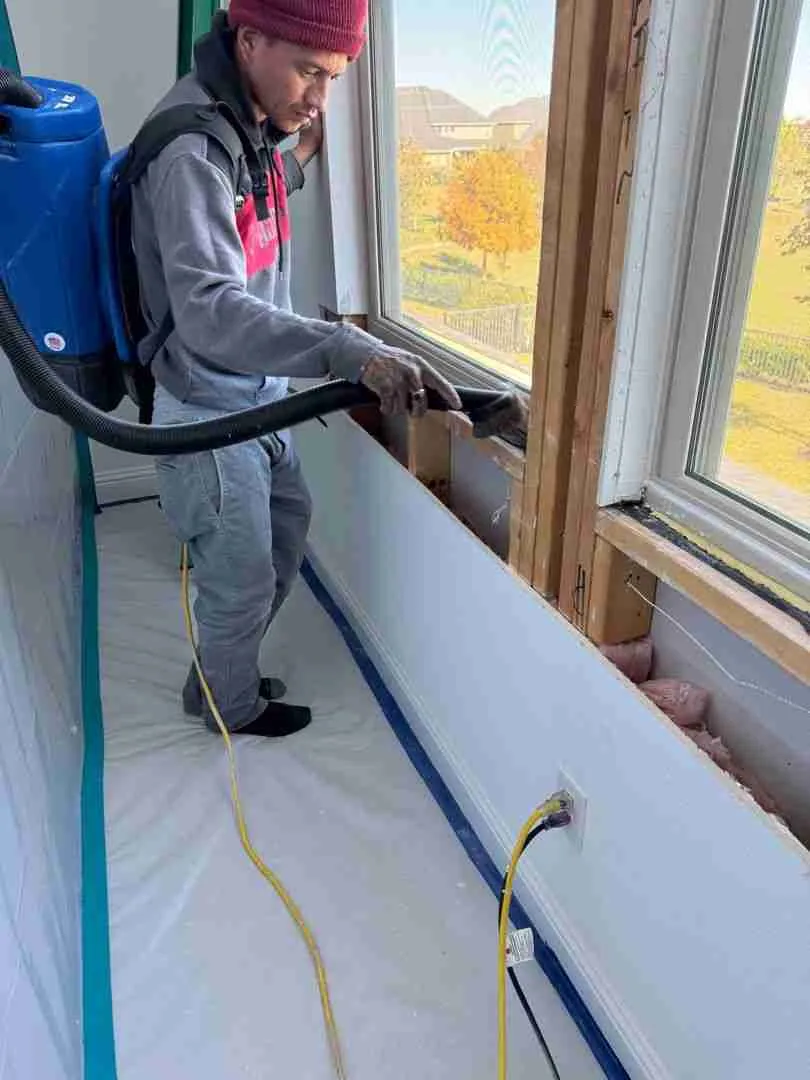
Once the work zones were sealed, we opened the wall cavities under each affected window. The insulation came out completely soaked and fully colonized. Contaminated drywall, baseboards, and trim were double-bagged for disposal. Every exposed framing surface got a thorough HEPA vacuum followed by treatment with an EPA-registered antimicrobial.
For structural lumber that was sound but discolored, we used a controlled process to clean surface contamination without weakening the wood. Anything too far gone got cut out and replaced.
Logging moisture at every stage
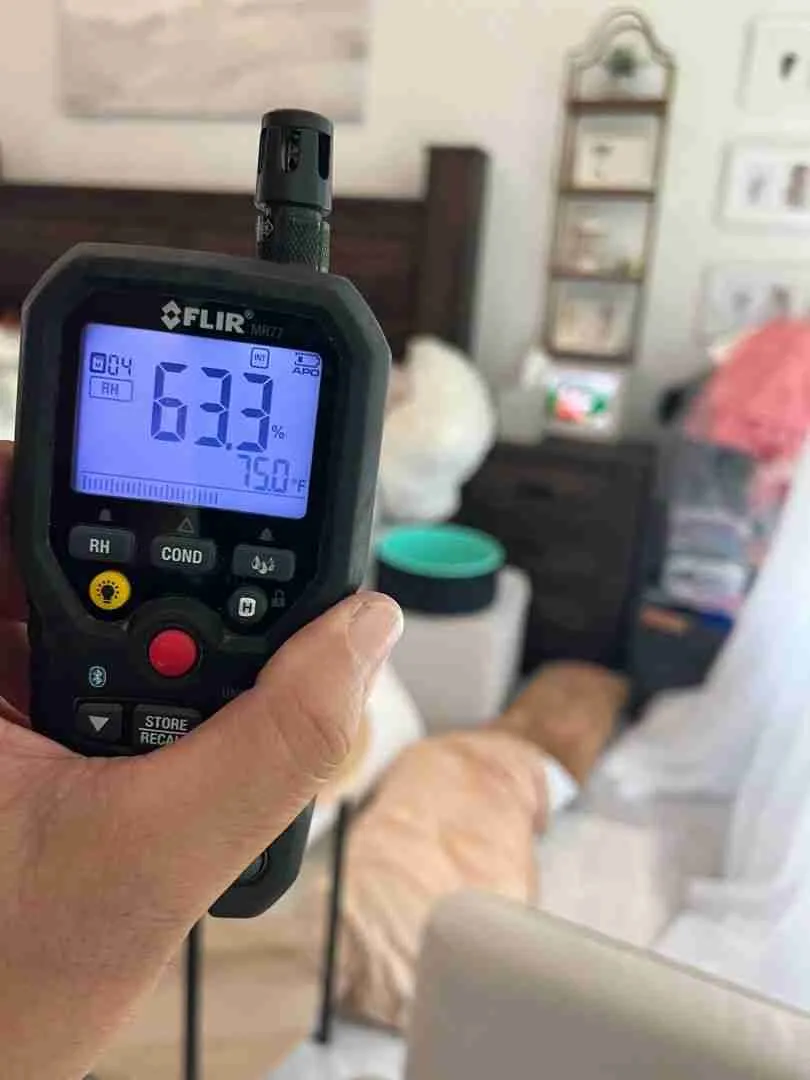
Drying matters as much as cleaning. We pulled moisture meter readings on framing, subfloor, and surrounding wall sections at every step. We logged humidity. We adjusted dehumidifier output based on what the readings told us. The goal isn’t to look dry, it’s to hit documented moisture levels that won’t support regrowth once the rebuild starts.
If you close walls up too early, you’re not finishing the job. You’re starting the next one.
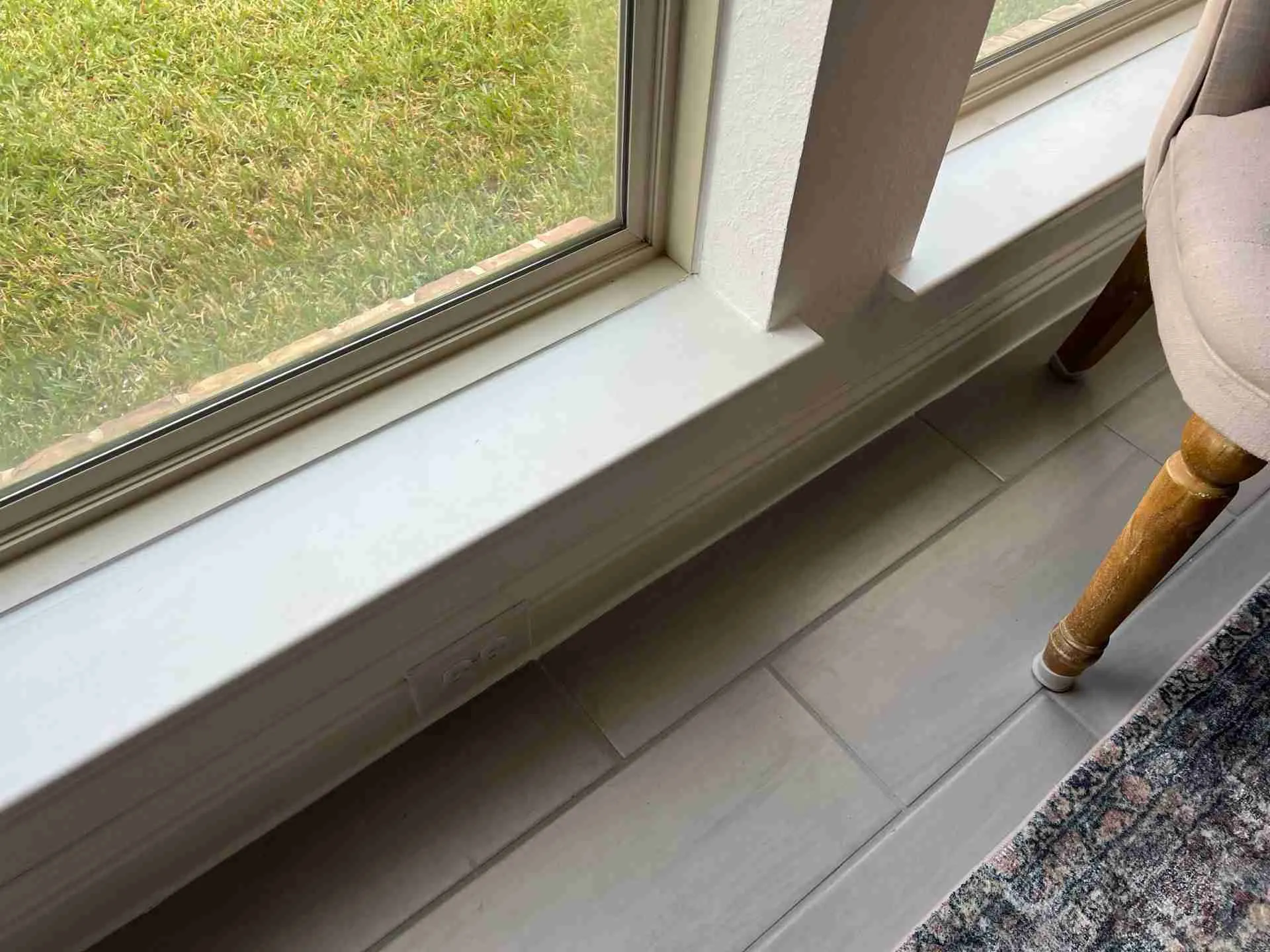
Moisture meter readings, HEPA vacuuming the window framing, and the restored, clean sill at the end of remediation.
 |  |  |
A Quiet Handoff Back to a Healthy Home
By the time we finished, every affected room had been cleared of visible mold, dried to acceptable levels, and prepped for reconstruction. The window sills, walls, and finishes looked clean and ready, and the indoor air felt noticeably better the moment containment came down.
A few takeaways from this job, in case you’re looking at something similar in your own home:
- If you see mold around a window, assume there’s more behind the wall. Visible growth is usually the tail end of a much bigger problem.
- Don’t open the wall yourself. Disturbed mold spreads fast, especially in Houston’s humid air.
- Track down the moisture source before remediation, not after. Otherwise the mold comes right back.
- Look for IICRC-certified contractors. The standard exists for a reason.
This is the kind of job we handle all the time as part of our residential restoration services across the Houston metro. The technical details vary, but the playbook is consistent: contain it, clean it, dry it, document it, rebuild it.
For homeowners dealing with an active leak behind the wall, our water damage restoration team can handle the moisture side in the same call. To catch mold early, our guide on how to prevent mold on windows is a good place to start, and our blog on the top signs you need mold remediation covers what to watch for.
Suspect Mold in Your Home? Don’t Wait It Out.
Mold doubles fast in Houston humidity, and a small stain on a sill is usually hiding a bigger problem behind the wall. Our IICRC-certified crew has been clearing mold from Houston-area homes since 2002, and we’re available 24/7 for emergency response.