Jump To
If you own a home with a crawl space in the Houston area, there’s a good chance you’ve wondered what’s happening down there. Maybe you’ve noticed a musty smell, condensation on your ductwork, or floors that feel a little spongy. Those are early signals that moisture is doing something it shouldn’t, and in Texas, it’s rarely a simple fix. Our team at Anderson Restoration has spent over two decades dealing with moisture problems under pier-and-beam foundations around here, and we’ve learned that every solution has a trade-off worth understanding. If mold might already be part of the picture, our professional mold remediation services start with diagnosing the source first, which tends to save you money and headaches.
Why Texas Crawl Spaces Get So Wet
Crawl spaces in Texas behave differently from the ones up north. Our soil is mostly expansive clay, which holds water like a sponge and releases it slowly during dry spells. That soil-level moisture keeps evaporating up into the crawl space year-round.
Then there’s the humidity. Houston averages 75% or higher relative humidity for long stretches, and when warm outdoor air sneaks into a cool crawl space through foundation vents, it condenses on every surface it touches. Cold AC ductwork, metal beams, copper plumbing, you name it. The result is a constant drip nobody sees because it’s all happening three feet below the house.
Add in our rainy seasons, the occasional hurricane-season storm damage pushing water through yards, and the fact that plenty of homes in Cypress, Katy, Tomball, and surrounding areas were built before modern vapor barriers were standard, and you have the perfect recipe for persistent dampness.
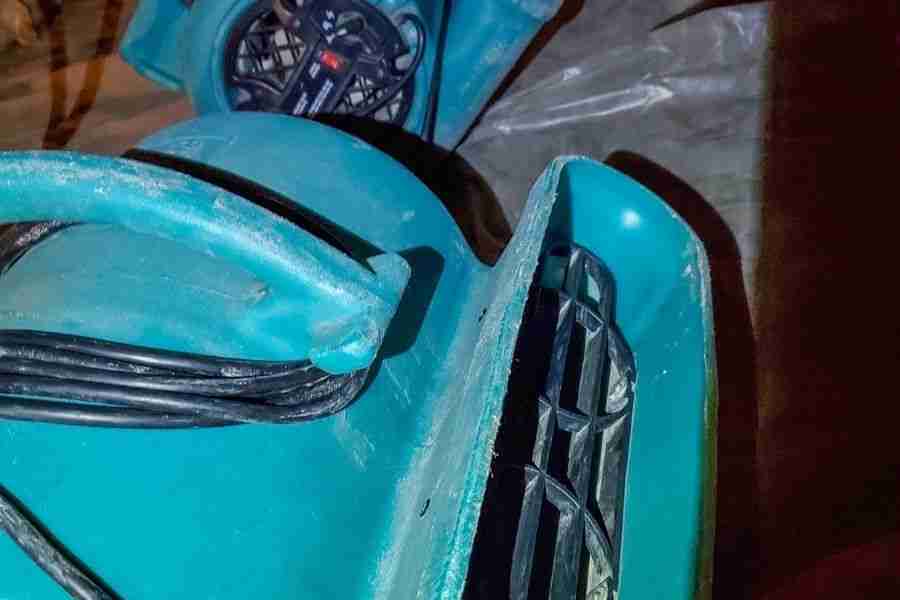
Drying out a wet crawl space takes more than opening a vent, we run commercial air movers under the house until the numbers say we’re done.
Warning Signs You Have a Moisture Problem
Most homeowners find out about crawl space moisture through their nose, their floors, or allergy symptoms that don’t make sense. Here’s what we see most often when we start a water damage restoration assessment:
- Musty or earthy smell that won’t go away
- Wood floors that cup, warp, or feel bouncy
- Visible condensation on AC ducts, plumbing, or the underside of subflooring
- Rust forming on metal supports or mechanical equipment
- Allergy or asthma symptoms that flare up indoors
- Higher humidity upstairs even when the AC is working
- Visible mold on wood beams, joists, or insulation paper
Any one alone is worth a second look. Two or more together, and it’s time to stop waiting. The EPA’s guide to mold, moisture, and your home covers what this kind of buildup does to indoor air quality, and the timeline is faster than people expect.
Not Sure What’s Going On Under Your House?
Our IICRC-certified team has been diagnosing crawl space issues across North and West Houston for over 20 years. We come out, we look, we tell you what’s actually happening.
The Real Trade-Offs of Fixing It
Here’s where most homeowners get stuck. There are three main ways people handle crawl space moisture in Texas, and each comes with genuine pros and cons. The right choice depends on your home, your budget, and how long you plan to own the place.
Option 1: Traditional Ventilation (Doing Nothing New)
Older Texas homes were built with foundation vents based on the idea that airflow would dry things out. In a drier climate, that might work. In Houston, it typically does the opposite. Humid outdoor air gets pulled in, cools under the house, and dumps moisture on every surface. You pay nothing upfront, but the hidden cost shows up later in wood rot, mold remediation, and higher energy bills from an HVAC system fighting humidity it shouldn’t have to.
Option 2: Partial Vapor Barrier
The middle-ground move is laying a plastic or reinforced polyethylene sheet across the dirt floor. That one change stops soil moisture from evaporating up and makes a surprisingly real difference. It’s also relatively affordable and fairly quick to install. The trade-off is that it does nothing about humid air flowing in through the vents, and it doesn’t fix condensation building up on cold ducts and pipes. For homes where moisture is mostly a ground-source issue, a proper vapor barrier holds the line for years. For homes dealing with heavy humidity swings, it’s a partial solution.
Option 3: Full Crawl Space Encapsulation
Full crawl space encapsulation is the most thorough approach. Heavy-duty liners on walls and floor, sealed foundation vents, a dedicated dehumidifier, and sometimes a sump pump depending on the grade. Done right, it turns the crawl space into conditioned space and shuts down the moisture cycle for good. The upfront investment is higher, and it’s a bigger project. The payoff shows up in lower humidity on the main floor, reduced HVAC strain, healthier indoor air, and a structure that holds up for decades longer. For homeowners planning to stay put, the math tends to work out over time.
| Approach | Upfront Effort | Long-Term Effectiveness | Best For |
|---|---|---|---|
| Traditional Vents | Minimal | Low (often counterproductive in Houston) | Dry-climate homes only |
| Vapor Barrier | Moderate | Good for ground-source moisture | Budget-conscious partial fix |
| Full Encapsulation | Significant | Excellent, long-term | Long-term homeowners, humid markets |
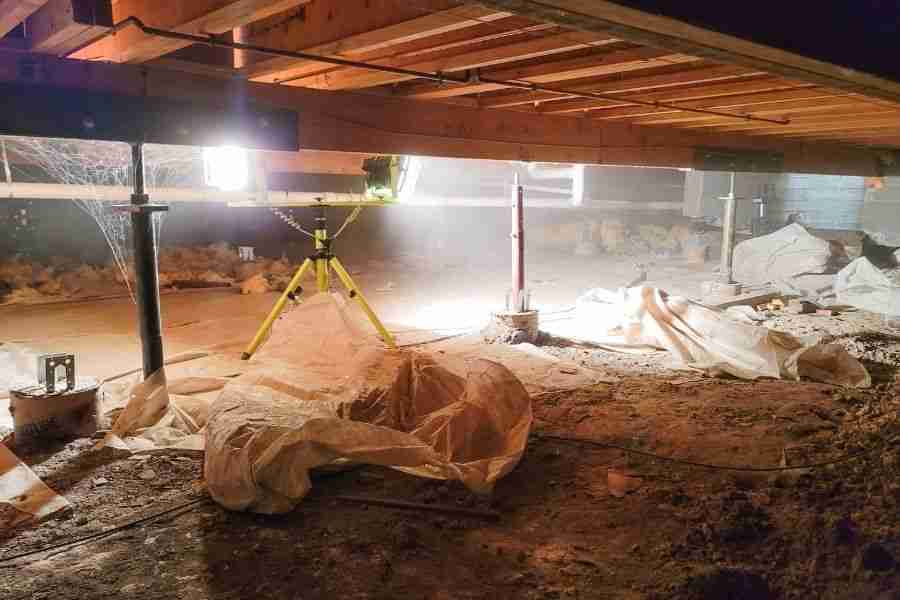
This is what a neglected Texas crawl space usually looks like, loose vapor barrier, exposed dirt, and moisture you can almost feel in the air.
What Happens If You Ignore It
Crawl space moisture isn’t just a problem trapped under the house. Roughly 40% of the air you breathe on the main floor comes up from below through what’s called the stack effect. Whatever’s brewing down there circulates through your living room, bedrooms, and kitchen along with it.
Over time, chronic dampness leads to wood rot in joists and subflooring, weakened structural supports, and accelerated mold growth timelines that often require professional intervention. We’ve crawled under homes where moisture had been ignored long enough that entire sections of subfloor needed to be cut out and replaced. It’s a cost that compounds fast.
There’s also a health angle. Prolonged exposure to mold spores and elevated humidity can worsen asthma, trigger allergies, and create respiratory issues, especially in kids, older adults, and anyone with a compromised immune system.
What to Do When You Spot Moisture
If you’ve noticed any of the warning signs above, here’s a practical order of operations:
- Don’t panic, but don’t wait. Crawl space moisture doesn’t get better on its own, but a few days to investigate properly won’t make or break anything.
- Check the perimeter first. Grading issues, clogged gutters, and downspouts dumping water near the foundation cause more crawl space problems than anything else. The Insurance Institute for Business and Home Safety has great resources on managing water around your home.
- Get a professional assessment. You want someone who can tell you whether you’re dealing with a plumbing leak, a grading problem, a ventilation issue, or all three. Guessing wrong costs more than assessing right.
- Address existing mold before encapsulating. Sealing a crawl space with active mold traps the problem and makes it worse. Remediation comes first.
- Think long-term. If you plan to stay five-plus years, the math on a permanent fix usually works out.
Quick Priority Check
See any of these right now? Call a professional this week:
- Standing water or actively wet soil
- Visible mold covering more than a few square feet
- Sagging or soft subfloor
- Sewage smell (separate, urgent issue)
Seeing milder signs? Schedule an assessment within the month. Ignored moisture almost always gets worse.
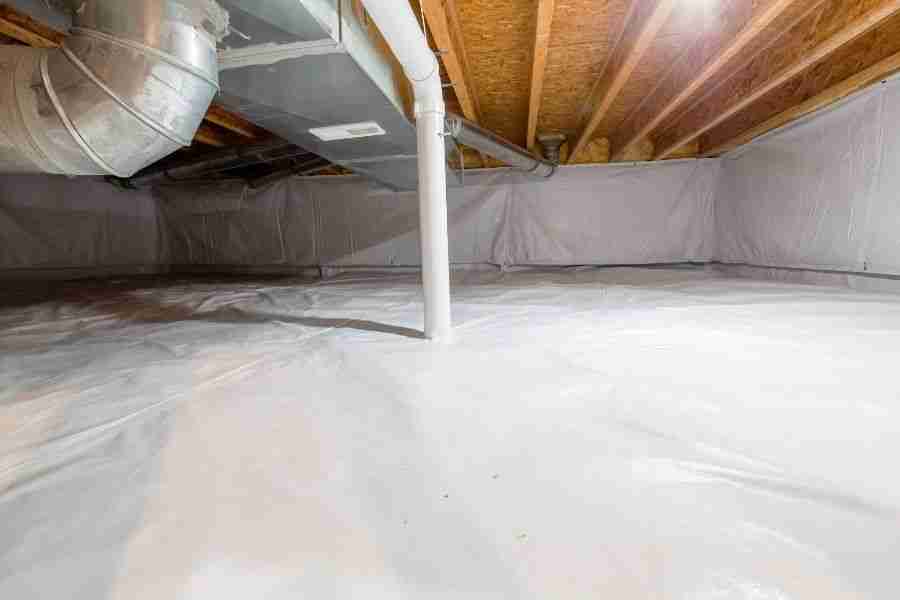
A fully encapsulated crawl space is the end goal, no exposed dirt, no open vents pulling in humid air, no moisture pathway to the floor above.
For homeowners in Cypress and surrounding North Houston communities, crawl space moisture is almost always worth addressing sooner rather than later. The humidity down here isn’t going anywhere, and neither is the clay soil under your foundation. Want to dig deeper? Check out our guides on whether a dehumidifier actually helps prevent mold growth and hidden mold hotspots most homeowners miss.
Frequently Asked Questions
Can I just put a dehumidifier down there and call it done?
A dehumidifier helps, but only as part of a larger plan. If your vents still let in humid air and your soil still evaporates moisture upward, the dehumidifier runs constantly against an open tap. Great as one piece of an encapsulated system. On its own, it’s a band-aid.
How do I know if my crawl space needs professional help or just basic maintenance?
If you see visible mold, rotting wood, standing water, or notice health symptoms that flare up indoors, bring in a professional. If you’re just seeing some condensation after a humid stretch or a faint musty smell that clears up, basic maintenance like cleaning gutters and fixing grading might get you there.
Will homeowners insurance cover crawl space moisture damage?
It depends on the cause. Sudden damage, like a pipe bursting and flooding the crawl space, is usually covered. Gradual damage from long-term humidity, seepage, or poor drainage is almost always excluded as a maintenance issue. We work with insurance carriers regularly and can help you figure out what’s likely to be covered before you file.
How long does crawl space encapsulation actually take?
Most residential projects run two to four days, depending on the size of the crawl space and how much prep work is needed. If active mold or water damage is present, we address that first, which can extend the timeline. The actual installation is usually the fastest part of the whole project.