Why Mold Keeps Coming Back?
Table of Contents
Reasons Why Mold Keeps Coming Back After Cleaning
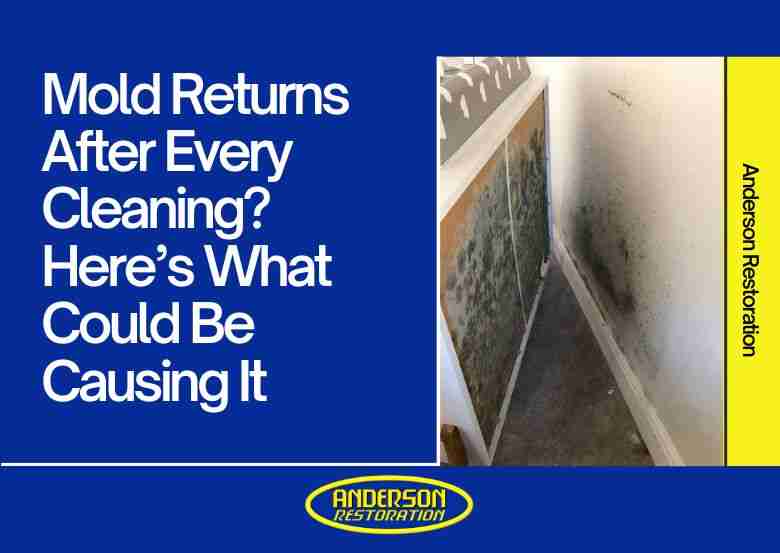
Mold is a common problem for Houston homeowners. You might scrub it off your shower floor or clean your walls only to see it return days later. It’s frustrating, tiring, and costly.
Why doesn’t it stay gone, no matter how much you clean? Killing mold is not easy, especially if you don’t fix the root problem. In most cases, those causes are hidden or hard to reach. That’s why professional mold remediation is often needed.
Here’s why mold keeps returning:
1. You’re Only Killing Surface Mold
Many people wipe away visible mold with store-bought cleaners. But those products only clean the surface. Mold roots, called hyphae, stay deep inside porous materials like wood or drywall.
If the roots remain, the mold will grow back fast. Professional remediation uses tools and products that clean deep below the surface.
2. Mold Spores Are Still in the Air
Mold spreads through spores that float in the air. Mold spores are extremely lightweight, allowing air currents to carry them easily. They are also highly resilient and not easily destroyed.
These spores remain dormant until they land on a damp or moist surface and grow again. Because they are microscopic and invisible to the naked eye, mold inspectors usually use specialized equipment like Air-O-Cell, which helps collect airborne mold spores for testing.
Even if you clean the mold you see, if the spores remain in the air, the mold will reappear in your home again.
3. Lingering Moisture After Water Damage
Water damage is a major trigger for mold. In Houston, flooding, plumbing leaks, and roof issues are common. Mold starts growing within 24–48 hours on wet surfaces like carpet, drywall, or insulation.
Even if repairs are made, moisture can stay trapped behind walls or under floors. Unless everything is fully dried, mold will return. That’s why it’s critical to act fast after water damage.
4. High Humidity in Houston’s Climate
Houston’s climate is hot and humid. In the summer, humidity levels often rise above 70%, which is ideal for mold growth.
Bathrooms, kitchens, and laundry rooms are always at risk. It is also the reason why mold keeps coming back in the shower. Moreover, everyday activities like cooking and showering add more moisture to the air.
If your home’s humidity stays high, mold will keep coming back, no matter how often you clean.
5. Poor Air Circulation
Rooms with poor airflow, like closets, attics, or crawl spaces, trap moisture. Without ventilation, these spaces become perfect breeding grounds for mold.
Ceiling fans, open windows, and exhaust fans can improve airflow. HVAC systems help, too, but only if cleaned and maintained. Dirty filters and ducts can spread mold spores instead of stopping them.
The Lifecycle of Mold
Understanding how mold grows is key to stopping it for good. Mold has four main life stages:
Stage 1: Hyphae Growth
Mold starts when spores land on a damp surface. They grow into hyphae, root-like structures that burrow into materials like wood or drywall.
The hyphae feed on these materials and form a visible mold colony called mycelium. Surface cleaning often removes the mycelium ( a mass formed by individual hyphae linked together to absorb nutrients and produce spores), but not the hyphae, which keeps the cycle going.
Stage 2: Spore Creation
The mycelium helps the mold grow by transporting nutrients. It also helps in reproduction. It produces new spores, which form on the surface of the mold colony.
Stage 3: Spore Dispersal
Once mature, spores are released into the air. They spread by air currents, pets, shoes, and people. That’s why professional mold remediation services in Houston seal off rooms before removing mold to stop spores from spreading further.
Without proper containment, cleaning can actually make the problem worse.
Stage 4: Spore Germination
When spores land on a moist surface with warmth and food, they grow and start the cycle again.
So even after cleaning, if moisture and food are present, mold can return.
What Does Mold Feed On?
Mold needs two things to grow: moisture and a food source. Houston provides plenty of both. Mold feeds on common household materials made from organic matter and if there’s both moisture and food source that are not addressed, mold can return.
1. Soil
Soil is full of moisture and organic matter. Mold spores in outdoor soil can come indoors through shoes or potted plants.
Overwatering indoor plants creates soggy soil that mold loves. Always check houseplants, and avoid keeping the soil too wet.

2. Plants
Dead plant parts are a food source for mold. Indoor plants shed leaves and stems. If these are not cleaned up, mold can grow in the pot.
Keep plants healthy, and remove dead parts quickly to reduce mold risks.

3. Wood
Wood is porous and holds moisture. That makes it perfect for mold growth.
In Houston homes, wood is often found in kitchens, bathrooms, and basements, places that get damp. Sealing wood helps, but leaks or humidity can still cause mold to grow inside it.

4. Paper
Paper absorbs moisture fast. Items like books, cardboard boxes, and documents are at risk, especially in damp places.
Even just high humidity can damage paper. To protect it, store important documents in sealed, dry containers.
5. Textiles
Clothes, curtains, towels, and carpets trap moisture and dust. These are perfect for mold to feed on.
Don’t leave wet clothes or towels in piles. Use your dryer right away. Ventilate laundry areas and bathrooms to keep them dry.

Reminder: Even if you scrub visible mold, it may keep coming back if these materials are feeding it. Mold could be growing in a potted plant or damp towel, not just on your wall.
Call now to speak with an expert about your concerns. We’re ready to help!
How To Prevent Mold From Coming Back
To stop mold for good, start by fixing moisture problems. Clean surfaces won’t stay mold-free if the air or materials stay damp.
Here’s how Houston homeowners can keep mold away:
- Use a dehumidifier in damp areas. Keep humidity below 50%. The Environmental Protection Agency (EPA) recommends this level.
- Fix leaks fast. Check plumbing, roofs, and windows often. Don’t let water sit.
- Ventilate your home well. Use exhaust fans in bathrooms and kitchens. Open windows when possible.
- Maintain your HVAC system. Clean filters and ducts to stop spores from spreading.
- Use mold-resistant materials during home renovations. Mold-resistant paint, drywall, and flooring can help prevent mold from taking hold.
- Care for indoor plants properly. Don’t overwater. Make sure airflow reaches the pots.
- Store paper and fabric in dry places. Use sealed bins. Avoid damp closets or basements.
- Monitor humidity levels with a hygrometer. Take action if they rise too high.
Most importantly, Call a mold remediation expert for large infestations. DIY solutions often miss hidden mold. Professionals have the tools to detect, contain, and remove mold safely and thoroughly.
Stop The Mold At Its Source
For Houston homeowners, humidity, hidden leaks, and poor airflow make homes especially vulnerable. That’s why professional help is often necessary. Our trained mold remediation team can find hidden sources, stop the spread of spores, and treat the problem at its root.
Don’t let mold become a recurring issue. With the right steps, you can protect your home, your health, and your peace of mind.
FAQs
Does mold die when it dries out?
Mold does not die when it dries out. Instead, it becomes temporarily inactive or dormant, similar to a hibernation state. The mold spores can remain dormant for years and will reactivate and start growing again once moisture or humidity returns to the environment
Can mold die on its own?
Mold spores are highly resilient and do not die on their own simply because moisture is absent. Without moisture, mold growth stops, but the spores survive in this dormant state. When the right conditions—such as moisture and warmth—are reintroduced, the mold spores can quickly germinate and resume growth. This means mold can persist in your home indefinitely unless it is physically removed.


Can You Stay in Your Home During Fire Damage Restoration

How Professional Dehumidification Works After Water Damage
We’re ready to answer your questions. Please submit the online form below to speak with an Anderson Restoration professional.