What is The Difference Between Storm and Hurricane?
Table of Contents
What is The Difference Between Storm and Hurricane
Across Houston, we frequently experience heavy storms, including tropical storms and hurricanes. While these weather events may seem similar, they differ in several significant ways. Understanding the key differences between tropical storms and hurricanes can help you prepare for these natural disasters and protect your home and family. But what is the difference between storm and hurricane, and how can you tell which one you’re dealing with?
Tropical storms and hurricanes both form over warm ocean waters and can bring intense rain, wind, and flooding. However, the primary difference lies in their wind speeds and overall intensity. Tropical storms have weaker winds compared to hurricanes, and their potential for destruction is generally lower. On the other hand, hurricanes are more powerful, with higher wind speeds that can cause severe damage to homes and infrastructure.
Knowing how these storms form and what they bring is crucial for any homeowner, especially in areas like Houston, where storm activity is common. Let’s break down each type of storm and explore how they can impact your home.

Tropical Storms
A tropical storm is a weather system characterized by strong winds and heavy rainfall. These storms form over warm ocean waters, typically in tropical or subtropical regions, and are classified when the sustained wind speeds reach 39 mph to 73 mph.


What Happens to Homes During a Tropical Storm?
When a tropical storm strikes, it can cause significant damage to homes, even though the winds may not be as strong as those in a hurricane. If you’re not properly prepared, you might experience issues such as roof damage, flooding, and debris in your yard. A tropical storm can also cause trees to fall, potentially blocking roads or damaging structures. Water intrusion is one of the biggest concerns, as excessive rainfall can lead to flooding, especially in low-lying areas.
How Do Tropical Storms Form?
Tropical storms form when warm, moist air rises from the ocean’s surface, creating a low-pressure system. As the air rises, it cools and condenses, forming clouds and releasing latent heat. This process strengthens the storm, and if the wind speeds increase enough, it can eventually become a hurricane. It’s important to keep an eye on weather alerts during storm season to track the development of these systems and respond accordingly.
Hurricanes
A hurricane is a powerful tropical cyclone that forms over warm ocean waters and is characterized by sustained winds of at least 74 mph. These storms are categorized on a scale from 1 to 5, with Category 5 hurricanes being the most destructive. Hurricanes bring much stronger winds, more intense rainfall, and a higher potential for flooding and storm surges than tropical storms.


What Happens to Homes During a Hurricane?
Hurricanes are capable of causing catastrophic damage, especially if homeowners aren’t adequately prepared. Strong winds can destroy roofs, shatter windows, and knock down trees, which can cause significant structural damage. Flooding is another major concern. In addition to the heavy rain, storm surges—the rise of ocean water due to high winds—can inundate coastal areas, causing widespread damage to homes and properties. Electrical outages, road blockages, and extensive property loss are common after a hurricane.
How Do Hurricanes Form?
Hurricanes form over warm ocean waters when a low-pressure area develops, drawing in moist air from the ocean. As the warm air rises and cools, it forms thunderstorms that spin around a central low-pressure system. This rotating mass of clouds and wind can strengthen into a full-fledged hurricane as long as it stays over warm water. Wind speeds escalate as the storm intensifies, and once the sustained winds exceed 74 mph, it is officially classified as a hurricane.
Call now to speak with an expert about your concerns. We’re ready to help!
What Happens When Either of These Storms Hits?
Due to the significant damage that storms like tropical storms and hurricanes can cause, many companies offer storm damage restoration services to help homeowners recover. These services are designed to assess the damage, provide immediate repairs, and ensure that your home is returned to its original condition. Storm damage can affect every part of your home, from the roof to the foundation, and restoring your property after a storm is essential for safety and functionality.
If you find yourself dealing with the aftermath of a tropical storm or hurricane, Anderson Restoration is here to help. Our team of professionals specializes in storm damage restoration, and we offer comprehensive services to restore your home and peace of mind. From water damage cleanup to roof repairs and structural fixes, Anderson Restoration ensures that your home is rebuilt to withstand future storms.
Why Choose Anderson Restoration?
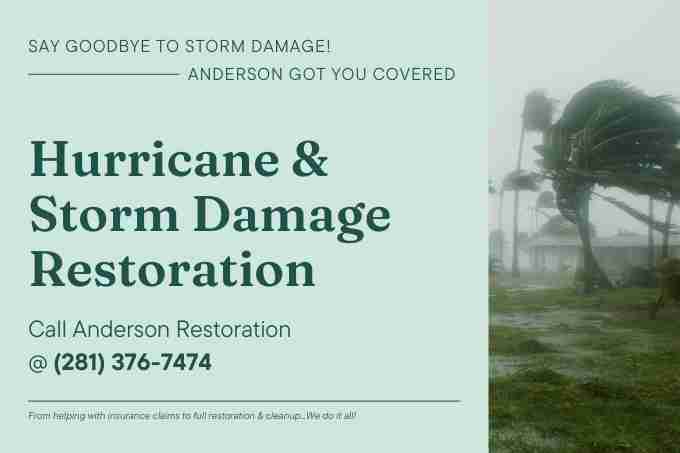
At Anderson Restoration, we understand the stress and uncertainty that comes with storm damage. With years of experience in storm damage restoration, our team provides prompt, reliable, and high-quality service to get your home back to normal as quickly as possible. We’re equipped with the tools, knowledge, and expertise to handle any storm-related damage, ensuring that your home is safe, dry, and secure.
Don’t wait until the damage becomes worse—contact Anderson Restoration today and let us help you restore your home after a storm. Our team is here to guide you through the process and bring your home back to its pre-storm condition, so you can move forward with confidence.


Can You Stay in Your Home During Fire Damage Restoration

How Professional Dehumidification Works After Water Damage
We’re ready to answer your questions. Please submit the online form below to speak with an Anderson Restoration professional.