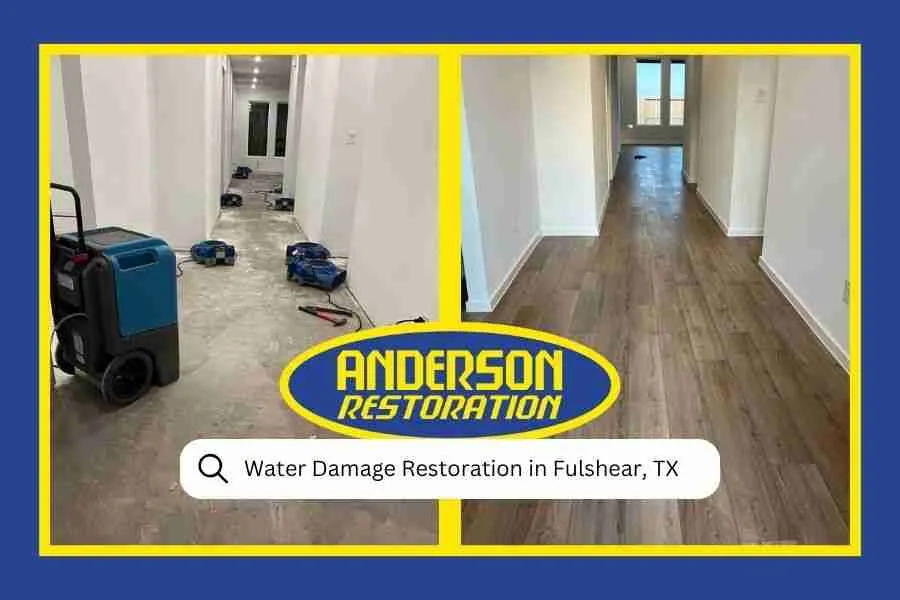
A finished, empty home in Fulshear took on water across almost its entire first floor, and our crew had it dried to standard in six days. Nobody lived there yet. Our team at Anderson Restoration has handled emergency water damage restoration across the North and West Houston metro since 2002, and this job is a good example of why speed matters.
What Happens When Water Runs Through a Ceiling and Nobody Is Home
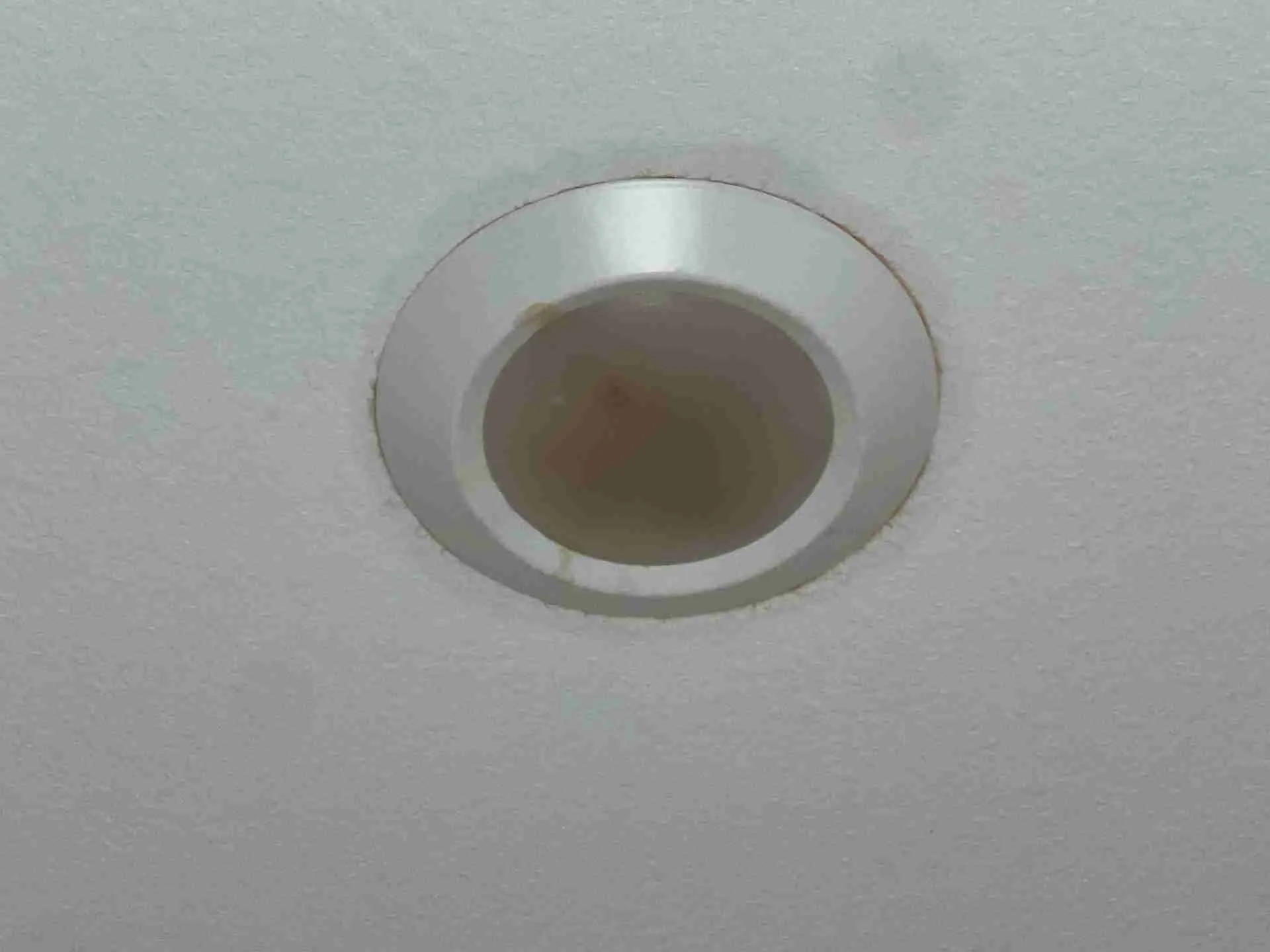
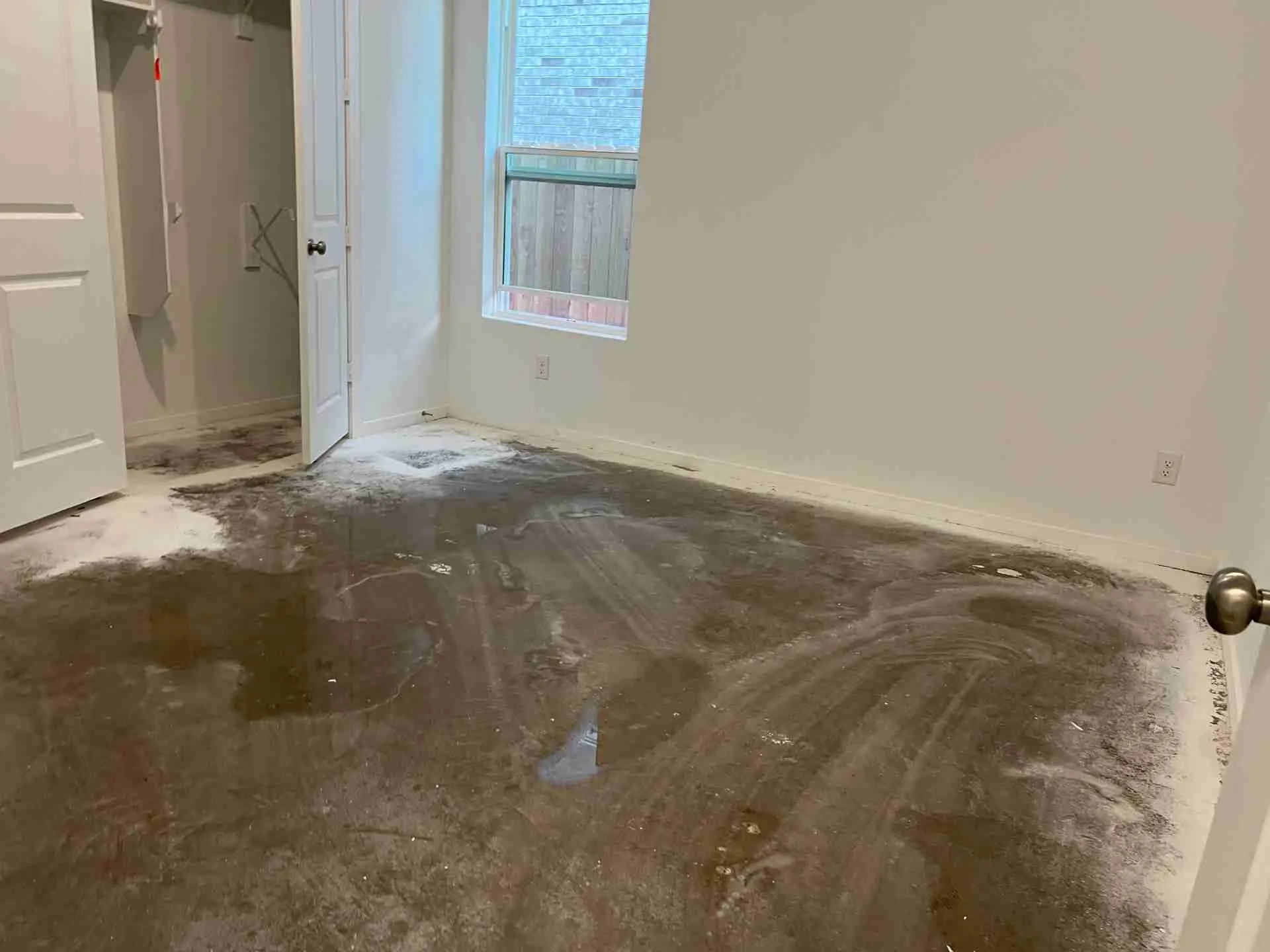
The water came from a failure above the ground floor ceiling. It collected inside the recessed light housings first, then ran down through the structure and spread across the first floor. The house was empty, so nothing stopped it early. By the time we arrived, most of that level was wet.
New construction carries a quiet risk. The home is finished and nobody walks through it, so a small failure gets hours to do real damage. In a lived in house, someone hears the drip.
Water sitting in a light fixture is a sight you don’t forget, and it tells us the drywall above is already soaking. A ceiling that bubbles or sags says the same thing, just slower.
Here’s what our crew walked into.
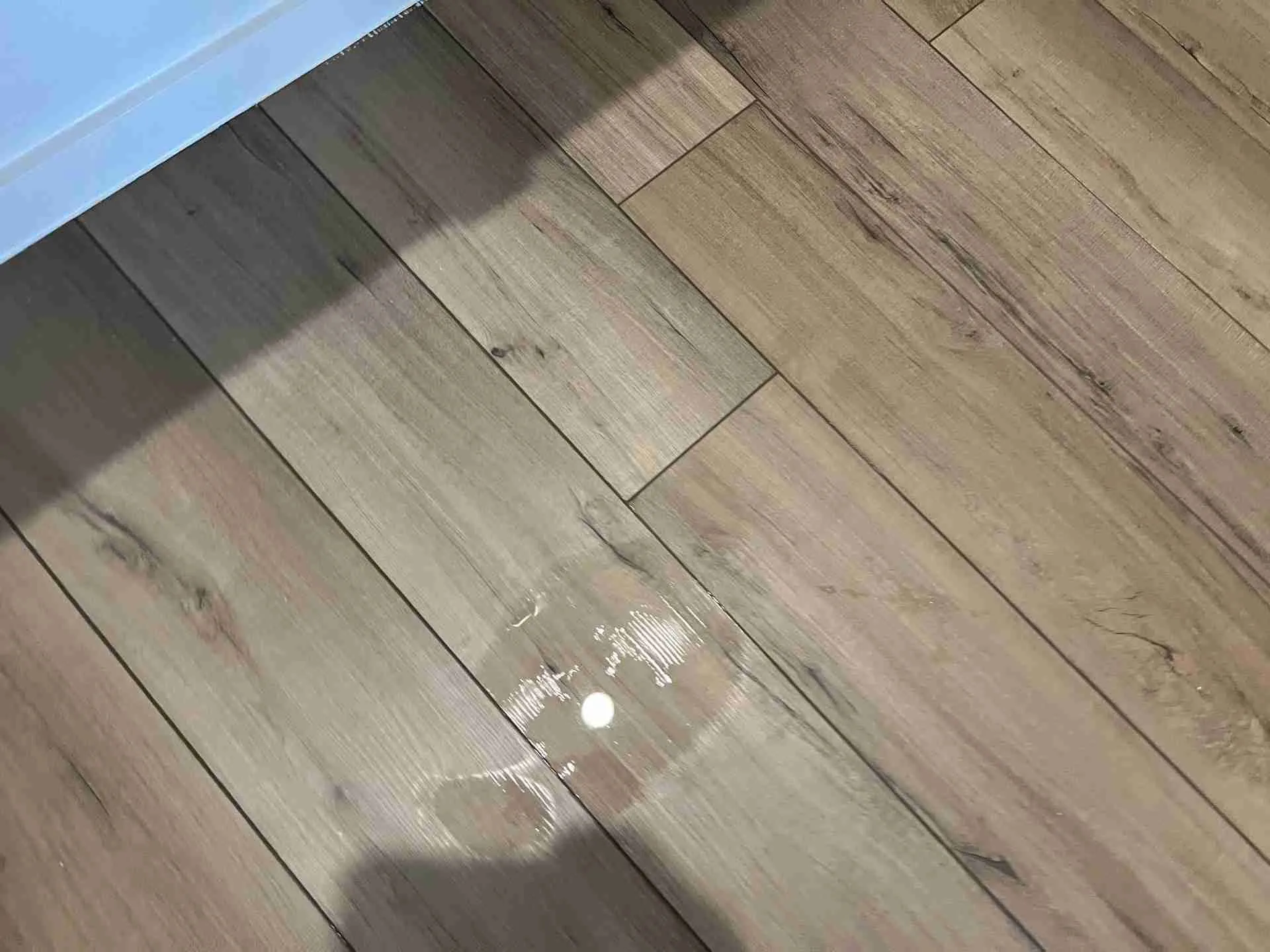 |  |  |  |
How Do You Find Water Hiding Behind Walls?
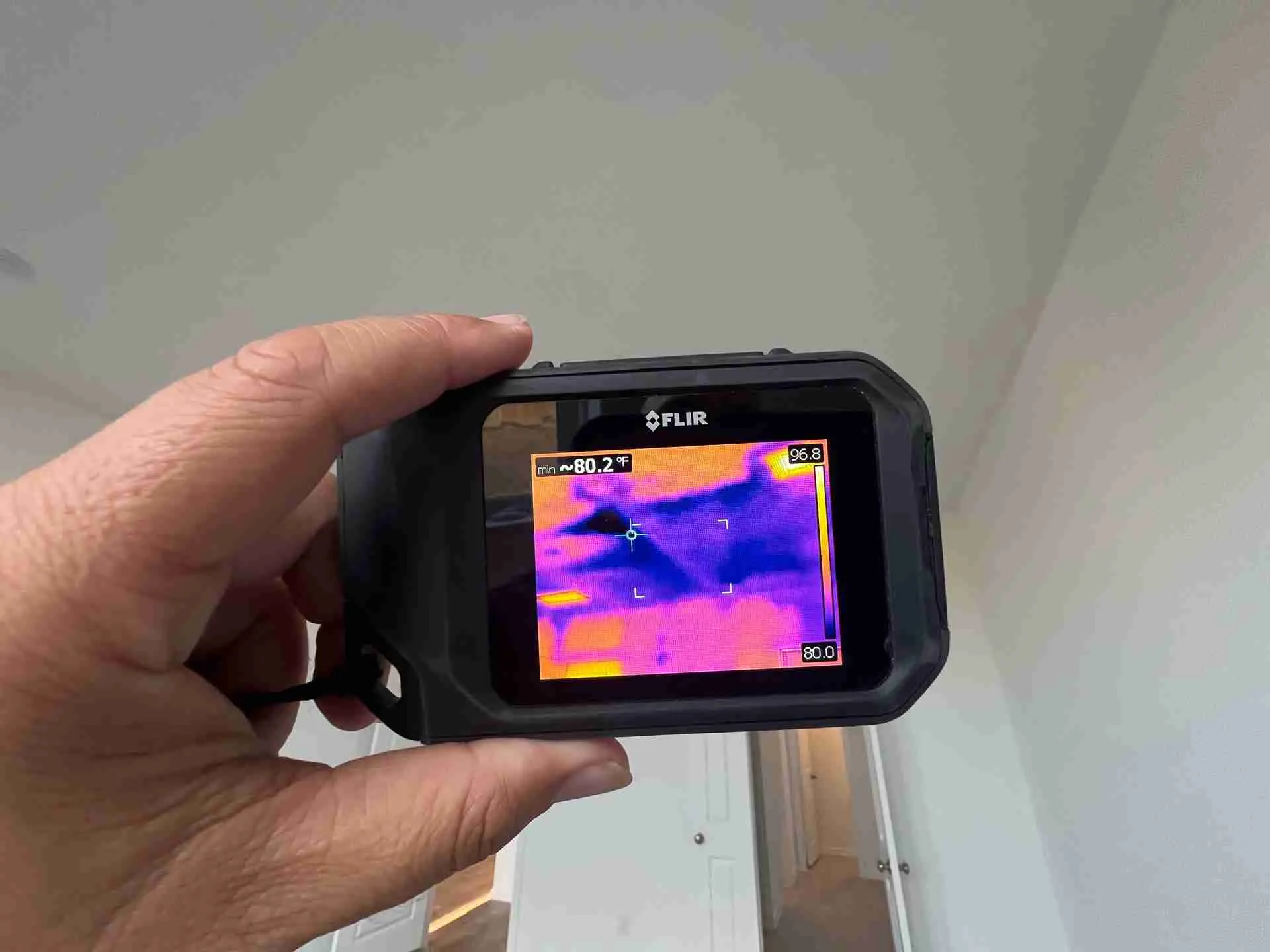
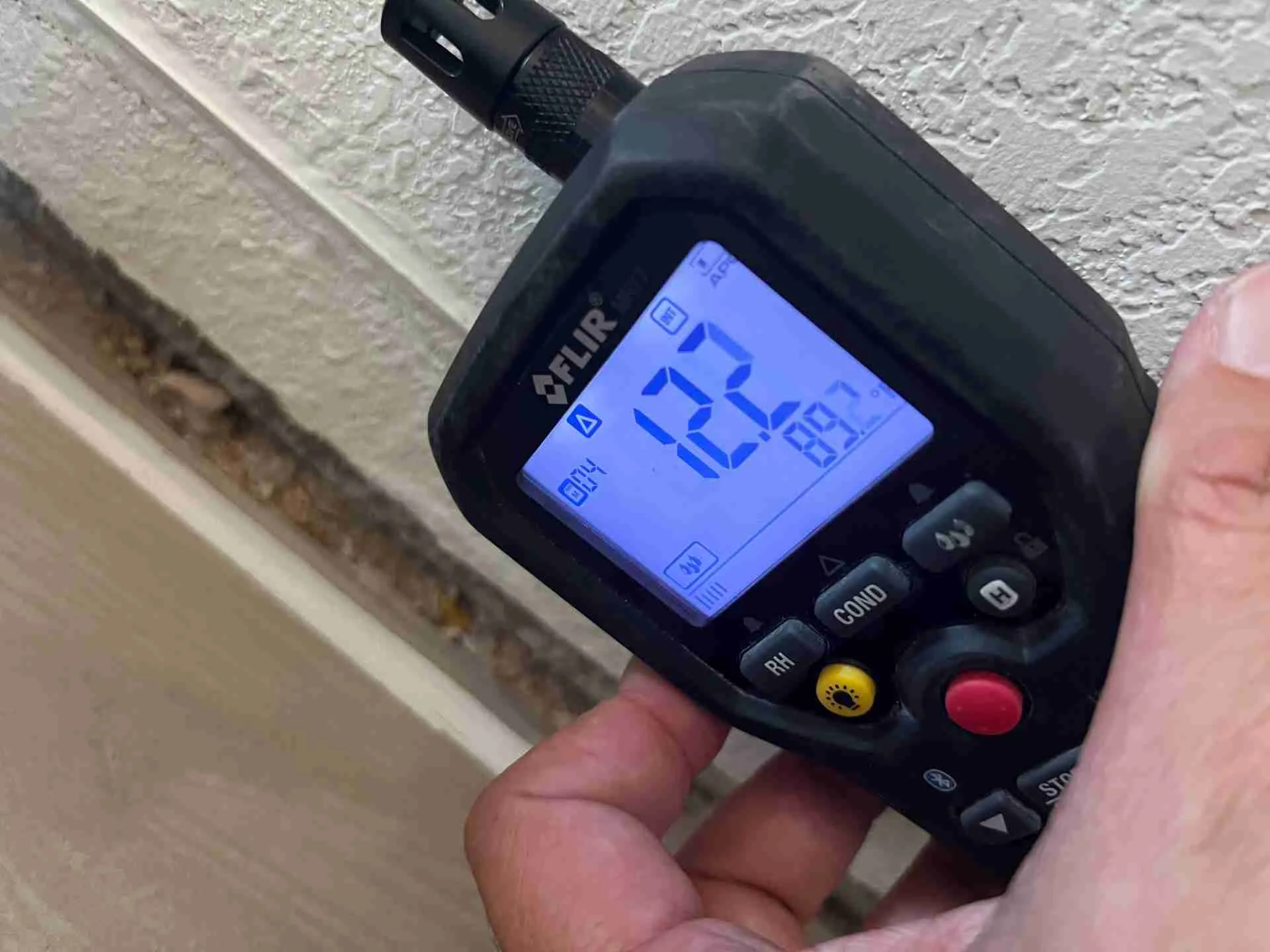
Thermal imaging and moisture meters show us where water went, not just where it shows. A thermal camera reads surface temperature, and wet material reads cooler than dry material next to it. Meters then confirm the real number inside the wall or floor. Skipping that step costs you whole rooms later.
Our readings ran well past the visible wet line, into rooms that looked perfectly fine from the doorway. The list we handed the builder was longer than anyone expected.
- Kitchen, living area, and entry.
- Study, pantry, and the utility room.
- Both bathrooms, plus the garage where water had run under the door.
- Every bedroom and closet on the level.
That map set the plan. It told us how much flooring had to come out, which walls to open, and where every piece of gear belonged.
Getting the Water Out, Then Opening Things Up
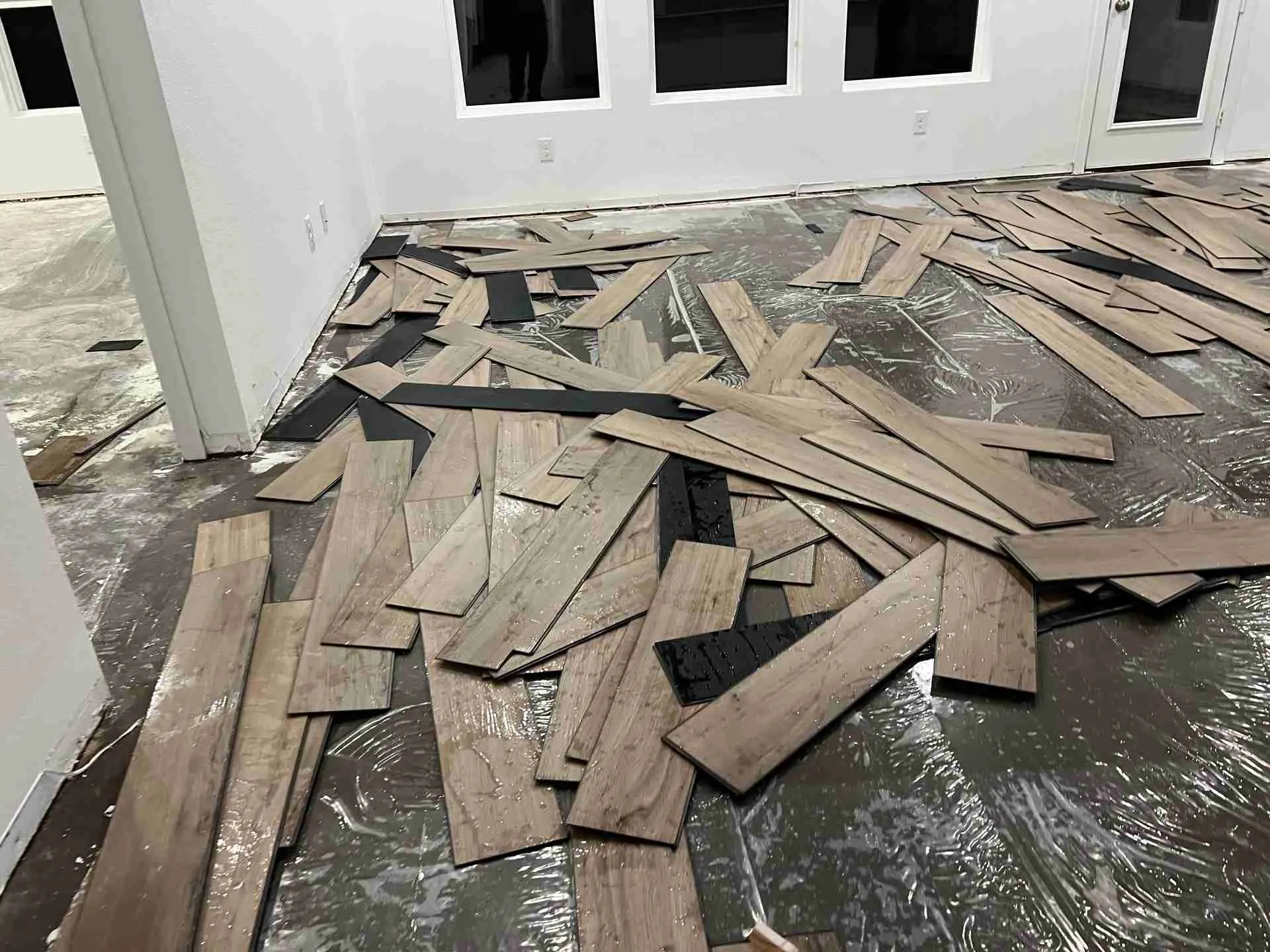
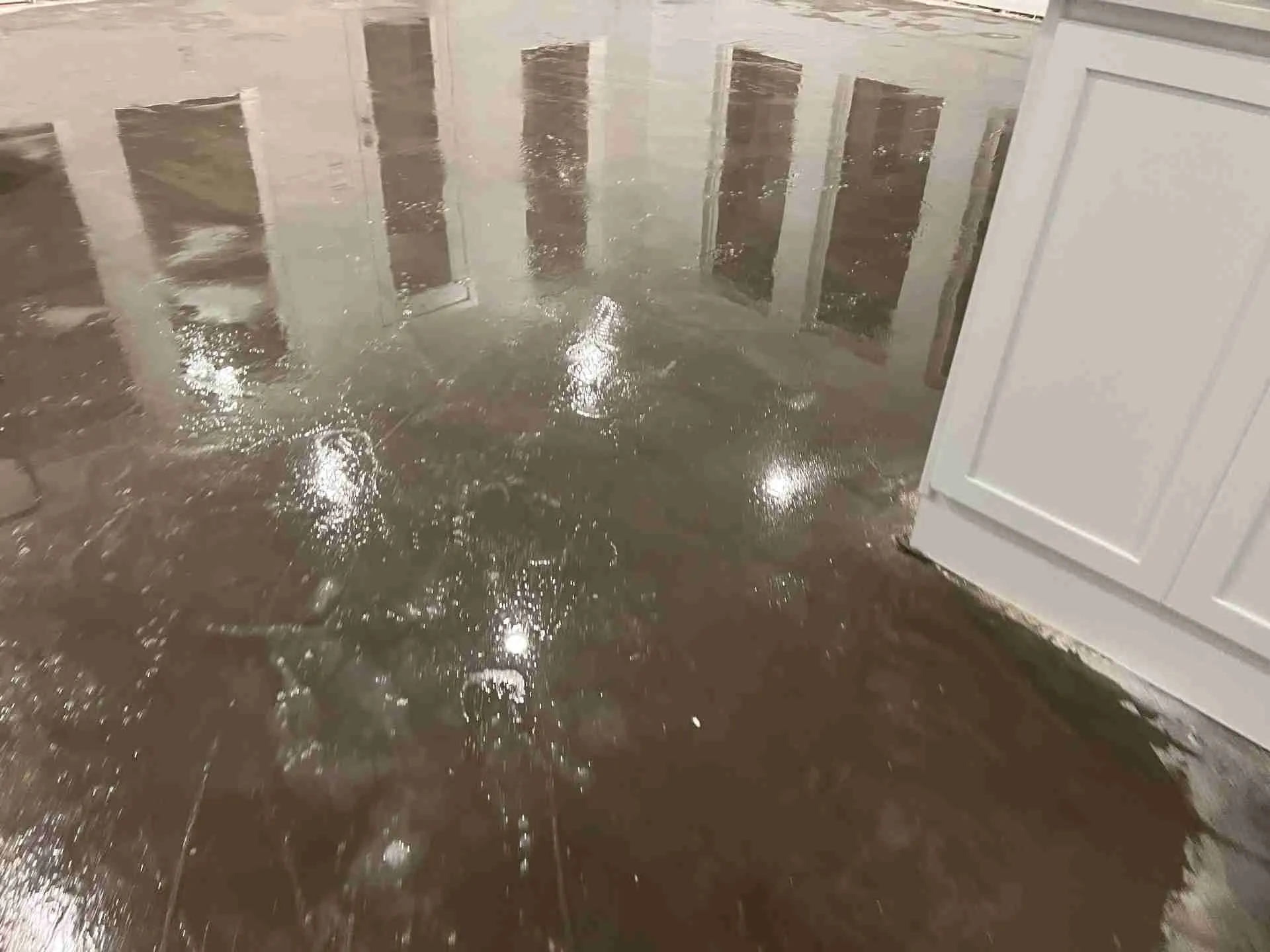
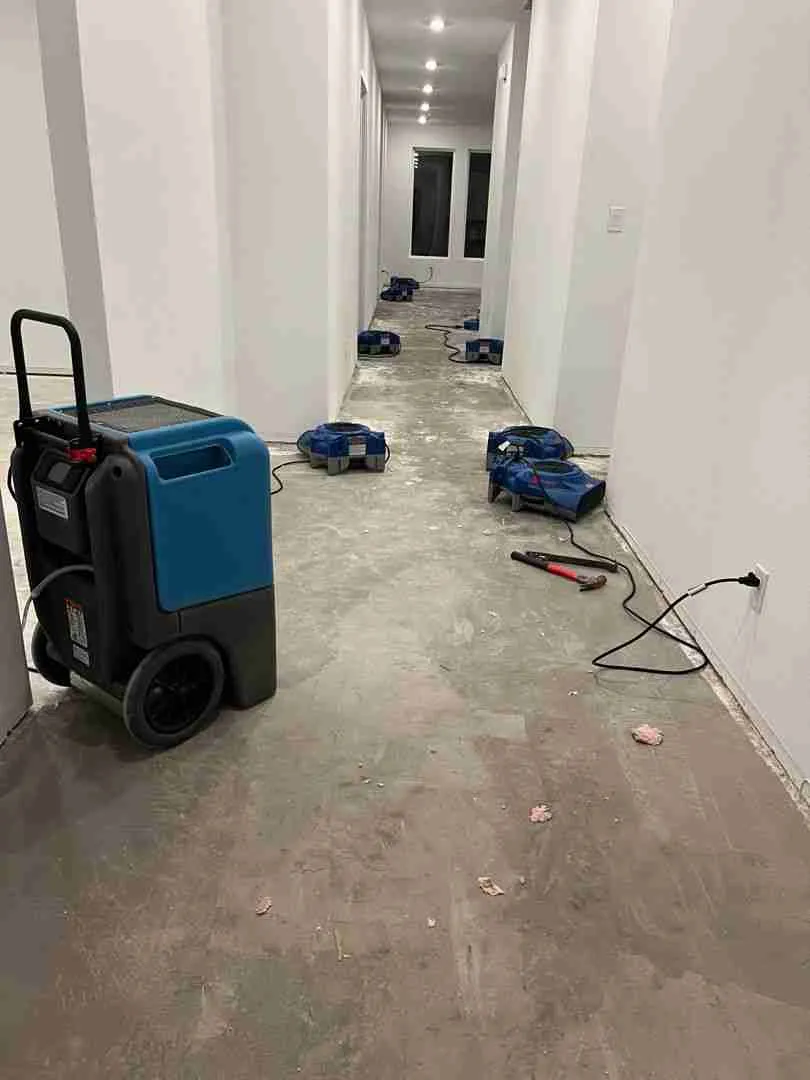
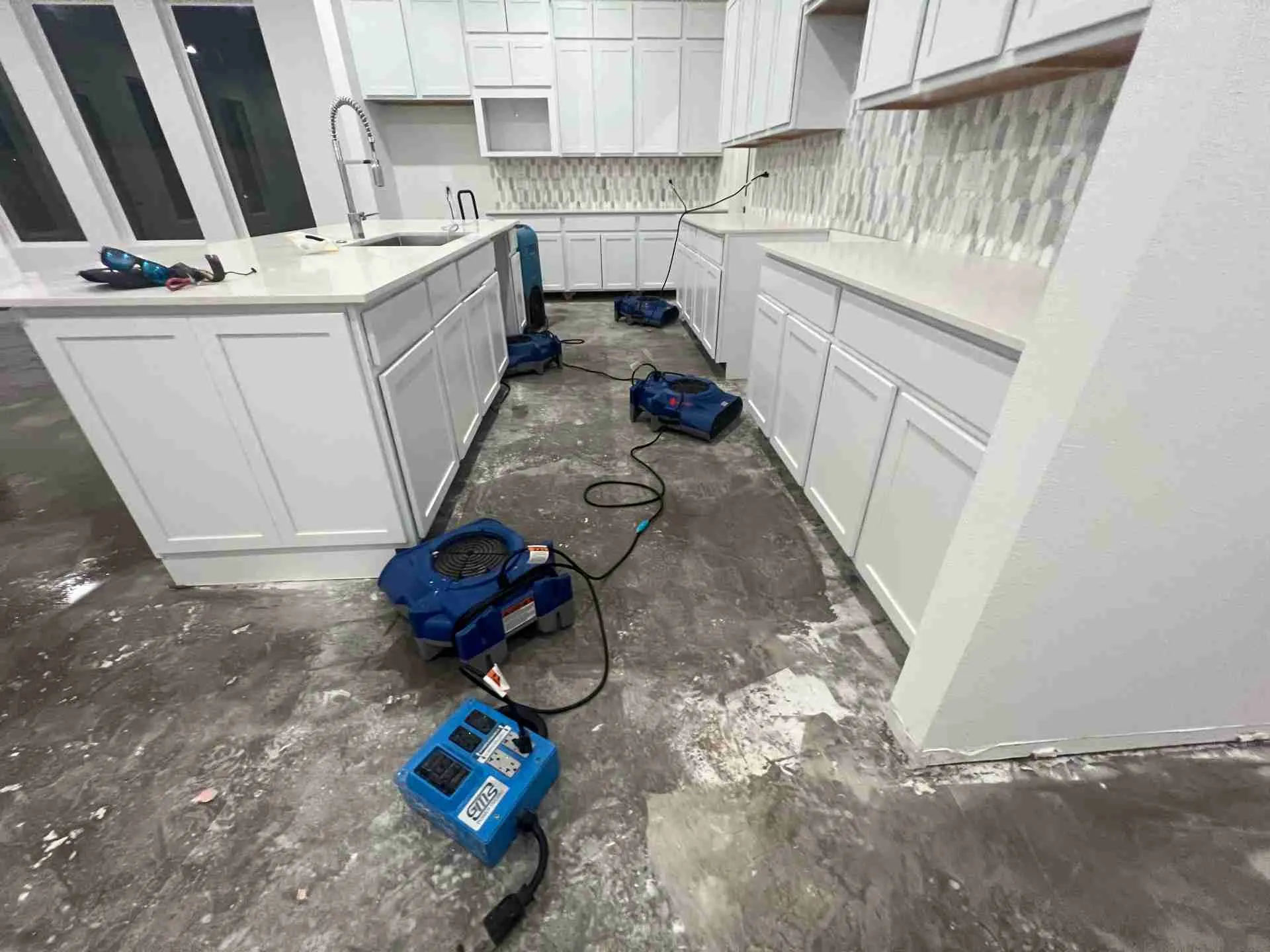
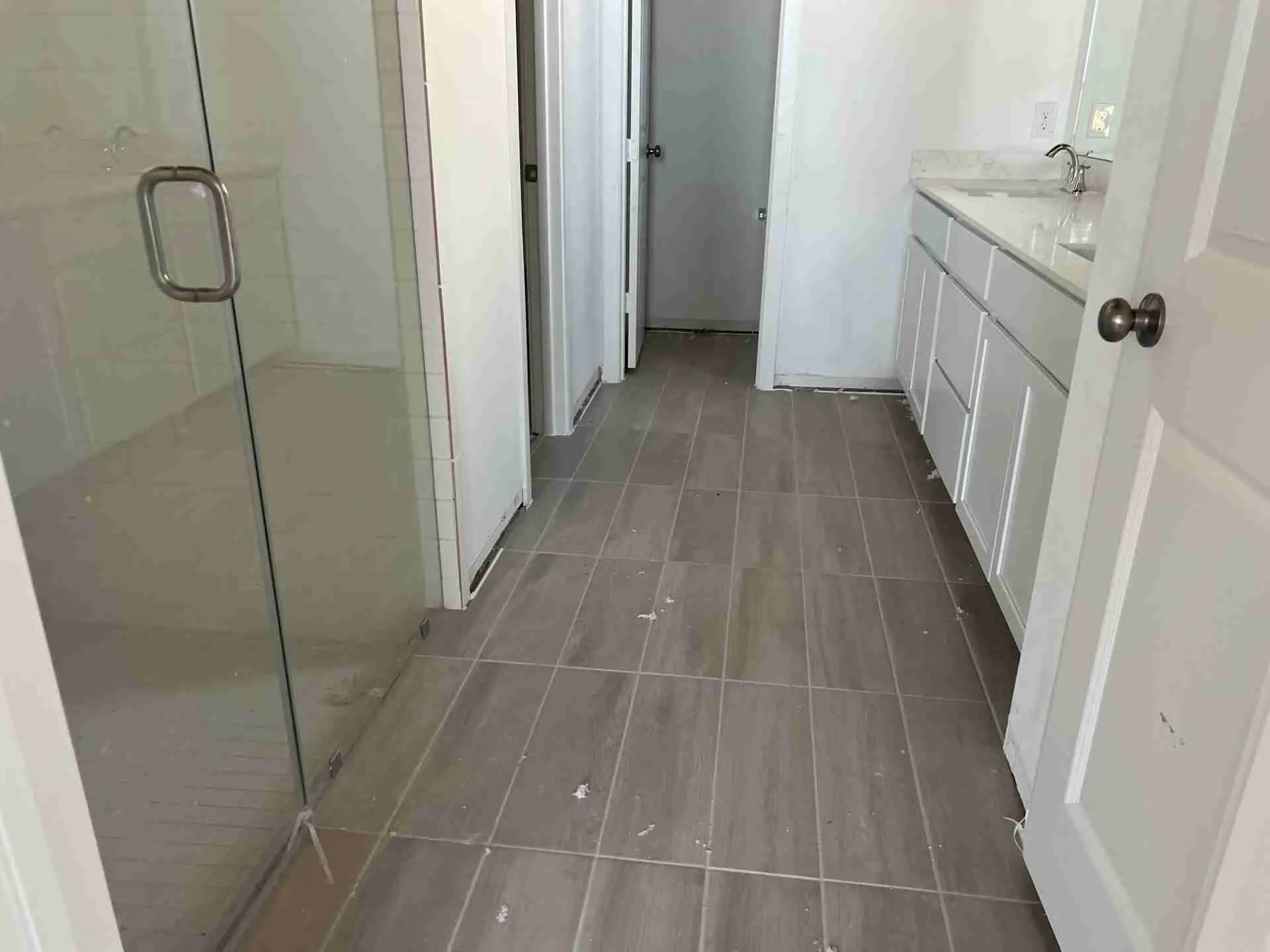
Standing water came out first, then we removed the wet material that would never dry in place. Plank flooring and underlayment came up, all the way down to the bare slab. Baseboards came off so air could reach inside the walls. Cabinets got the same treatment where water had wicked under the toe kicks.
- Extracted standing water room by room.
- Removed soaked plank flooring and underlayment down to the slab.
- Pulled baseboards throughout the affected rooms so trapped air could move.
- Detached cabinet toe kicks.
- Set air movers and dehumidifiers, then logged readings daily.
People ask why we pull trim instead of just aiming a fan at the room. Trapped air is the reason. A wall cavity holds moisture long after the paint feels dry. Mold needs very little time once that moisture settles in, and the EPA puts that window at 24 to 48 hours.
 |  |  |  |
Six Days Later, the House Hit Dry Standard
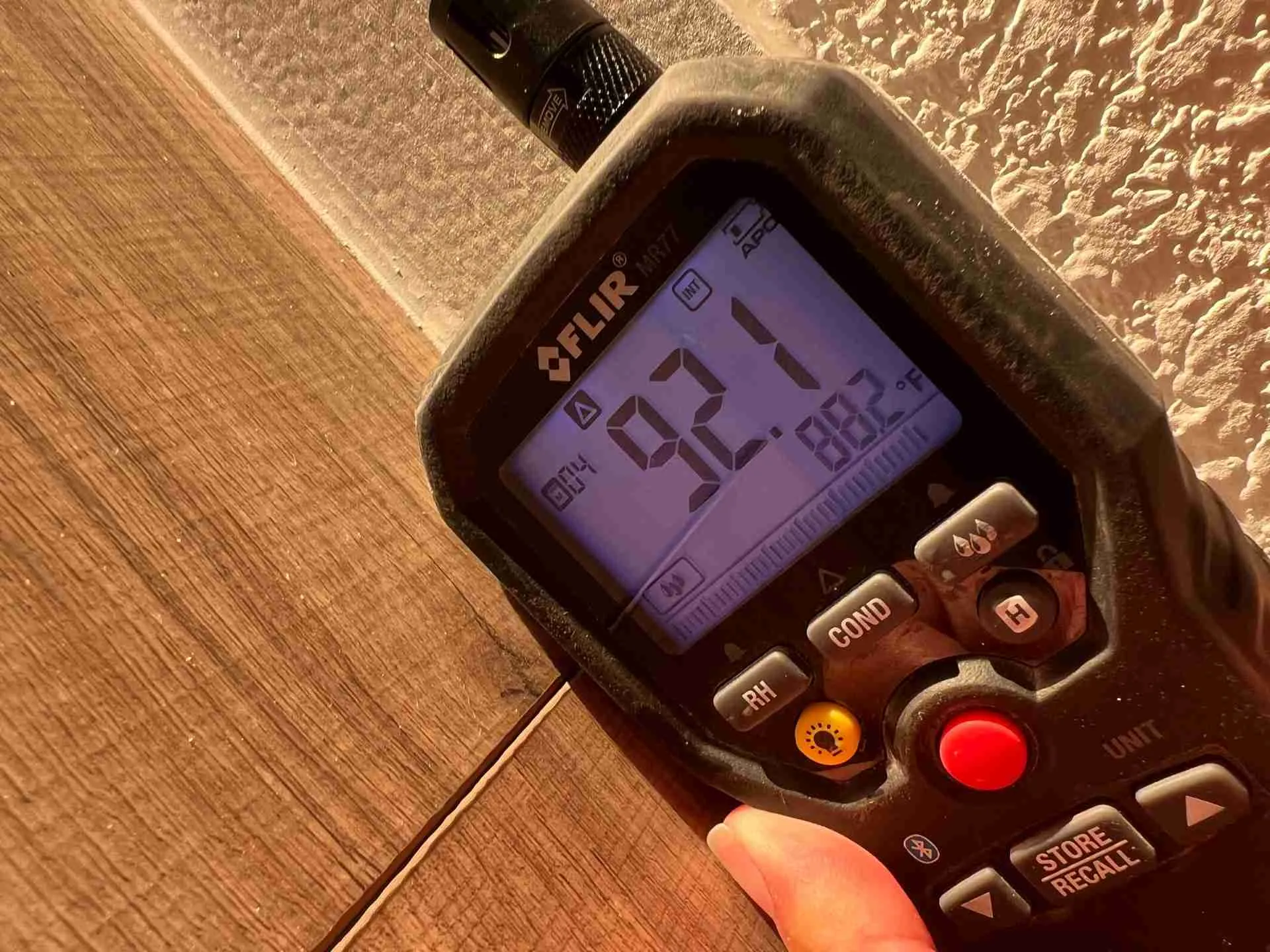
Final readings on day six confirmed the structure was back to dry standard. We checked every affected room daily and wrote down the numbers as they fell. Equipment stayed until the material read dry, not until the calendar said so. Then the gear and the debris came out.
Dry standard is not a feeling. It’s a measured comparison against dry material in the same house, and the method comes from the IICRC S500 water damage standard. As an IICRC certified firm, that’s the target we document toward on every loss.
The home was handed back ready for rebuild. Drying and rebuilding are two different phases of the same project, and knowing where one ends helps everybody plan.
Fast drying is also mold prevention. Six monitored days is what keeps a water loss from becoming a mold remediation job in month two, and there are early signs worth watching for either way. Same process, same documentation, on water damage calls in Katy and Fulshear.
 |  |  |
Questions We Hear After a Water Loss
Most homeowners ask the same three things once the water is gone. How long will drying take, does an empty house really need this, and who pays for it. Short answers below, based on how these jobs actually run in the Houston metro.
How long does drying take after water damage?
Three to seven days is typical for a home this size. This one took six. The timeline depends on how far the water traveled, what it soaked into, and how fast the call comes in.
Does an empty or brand new home still need professional drying?
Yes, and often more urgently. An empty house has nobody to catch the problem early, so water sits longer and travels farther. Fresh paint and new flooring hide a wet slab very well.
Will insurance cover a loss like this?
That depends on the cause and the policy language, so we won’t promise an answer we can’t back up. What we can do is document every stage, from the first thermal scan to the last verified reading. We work with carriers directly on claims.
Water Coming Through Your Ceiling? Let’s Get Ahead of It
If you can see water, there’s usually more that you can’t. Here’s what helps before we arrive:
- Shut off the water supply if you can reach the valve safely.
- Stay clear of sagging ceilings and light fixtures holding water.
- Take photos of every wet room for your claim file.
Anderson Restoration answers 24/7, 365 days a year, across the North and West Houston metro. Family owned since 2002, IICRC certified in water, mold, and fire. Restoring Lives One Project At A Time.