Your water heater is the kind of appliance you ignore until something goes wrong. And when it does go wrong, it tends to go wrong fast. At Anderson Restoration, we’ve responded to plenty of flooded utility rooms in Houston homes where a failing water heater was the culprit. It’s one of the more common causes of water damage restoration calls we get, and it’s almost always preventable.
Water heaters usually give you warning signs before they fail completely. You just have to know what to look for.
Water heater already caused damage?
Our team responds 24/7 across the Houston metro area with an average response time of 60 minutes.
7 Warning Signs Your Water Heater Is Failing
Most units last 8-12 years. According to the U.S. Department of Energy, sediment buildup and corrosion are the top causes of premature failure. If your unit is approaching or past the 10-year mark, watch for these signs.
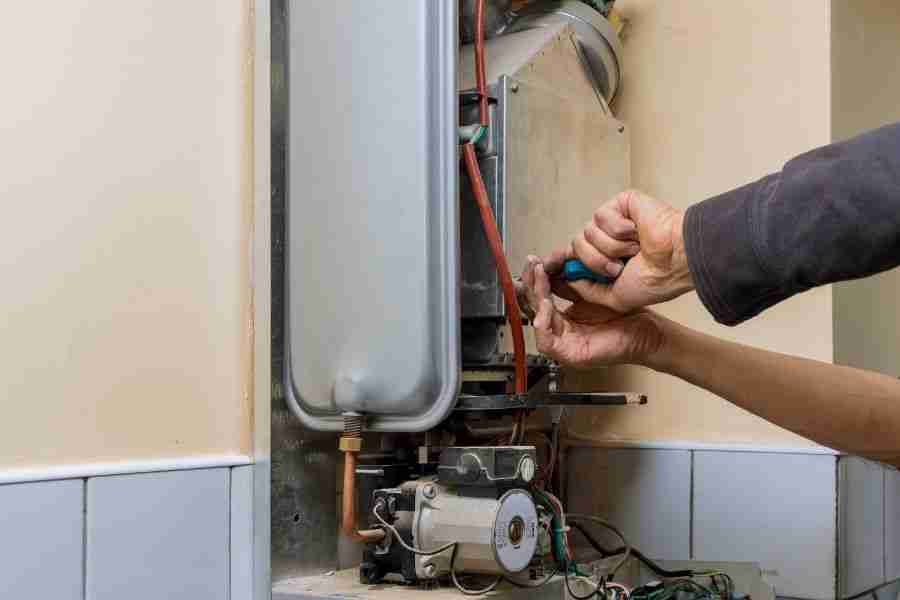
Knowing when to repair or replace your water heater can save you from a much bigger problem down the road.
1. Running Out of Hot Water Faster Than Before
If your shower is going cold halfway through and nothing else changed, sediment has likely built up at the bottom of the tank. It reduces available capacity and insulates the heating element, making the whole system less efficient. A flush might help on a newer unit, but if yours is older, this is usually the beginning of a longer list of problems.
2. Rusty or Discolored Hot Water
Brown or reddish hot water signals corrosion inside the tank. Try running the hot water for a few minutes. If it clears up, the issue may be in your pipes. If it stays discolored, the tank itself is rusting from the inside, and that’s not something you fix. You replace it.
3. Rumbling, Banging, or Popping Sounds
A quiet water heater is a happy water heater. Rumbling and popping mean hardened sediment is coating the heating element and tank walls. The noise happens as water pushes through that layer. These units are less efficient, working harder than necessary, and more likely to develop leaks.
4. Visible Rust or Corrosion on the Exterior
Give your water heater a visual check. Rust on the tank body, especially near the top or bottom, isn’t just cosmetic. It usually means moisture has been sitting where it shouldn’t. That can come from condensation, a slow drip, or a compromised fitting, all worth addressing before things escalate.
5. Water Pooling Around the Base
Don’t write off recurring moisture near the base as condensation. A puddle that keeps coming back usually points to a slow leak from the tank, a loose fitting, or the pressure relief valve. Even small leaks cause significant damage to flooring and walls over time. Our post on how delaying repairs affects water damage costs explains exactly how fast that compounds.
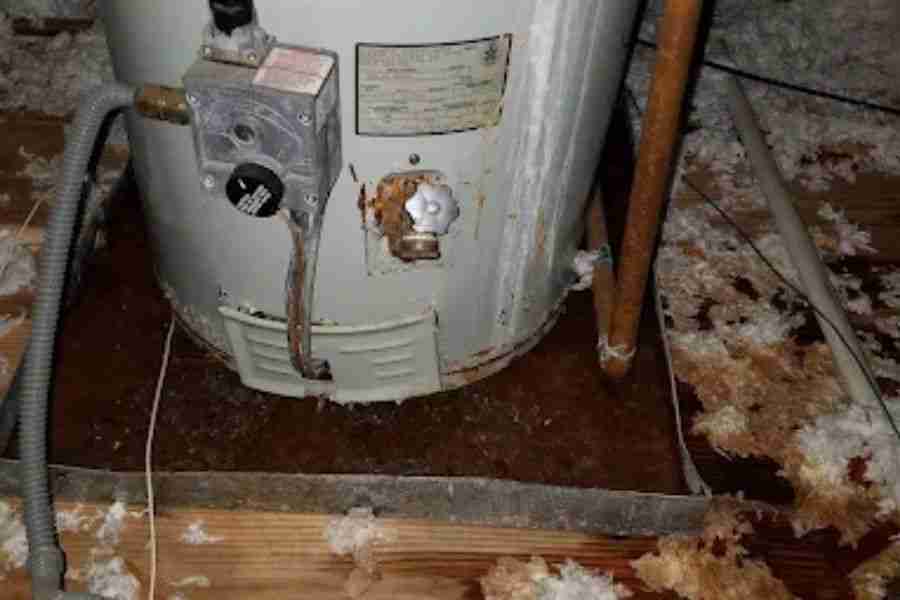
This is what a water heater leak looks like after it’s had time to spread. Rust and moisture damage move faster than most people expect.
6. Inconsistent Water Temperatures
Scalding one day, lukewarm the next. Temperature swings usually point to a failing thermostat or heating element. It’s tempting to write this off as a fluke, but inconsistency is typically a precursor to a full breakdown.
7. The Unit Is More Than 10 Years Old
Age alone isn’t a failure guarantee, but it’s a real risk factor. An older unit showing even one of the signs above is far more likely to fail suddenly, and a sudden water heater failure means a significant volume of water in a short amount of time.
Why Houston Homes Face Extra Water Heater Stress
Houston’s hard water accelerates sediment buildup in tanks, which reduces efficiency and shortens the lifespan of your unit faster than it would in areas with softer water. Add in the region’s persistent humidity, and water heaters in non-climate-controlled garages deal with more condensation and corrosion on fittings over time.
Then there are the freezes. Hard freezes in early 2024 and again in early 2026 put serious stress on pipes and water heaters across the area. Units installed near exterior walls or in poorly insulated spaces are especially vulnerable. Water softeners are worth watching too, since the lines feeding them can freeze before you notice anything wrong.
Repair or Replace? A Quick Checklist
Lean Toward Repair If:
- The unit is under 7 years old
- Only one component has failed (thermostat, element, or valve)
- No corrosion is present on the tank body
- Repair cost is less than half the cost of replacement
Lean Toward Replacement If:
- The unit is 10 years old or more
- You’re seeing more than one warning sign at once
- Hot water is discolored (internal rust)
- Water is leaking from the tank body, not just a fitting
- You’ve repaired the same unit more than once recently
The EPA recommends replacing water heaters older than 10 years with high-efficiency models. Newer tankless units use significantly less energy and come with far lower failure risk over time.
The Water Damage Risk Nobody Talks About
A standard 40-50 gallon tank holds 40-50 gallons of water. When one fails suddenly, that water moves fast. We’ve responded to water heater failures at Houston homes that spread across multiple rooms and required days of professional drying.
Slow leaks are just as dangerous. A small drip over weeks creates ideal conditions for mold to form behind walls and under flooring, often without any visible signs until the damage is already significant. Our article on how fast mold grows after a water leak explains how quickly that timeline unfolds in Houston’s climate.
Our team at Anderson Restoration handles the full process: emergency extraction, drying, and working directly with your insurance carrier. For a better understanding of what coverage typically looks like, check out our guide on how long a water damage insurance claim takes.
Dealing with water damage in your Houston home?
Anderson Restoration has been helping homeowners across the North and West Houston area since 2002. IICRC-certified. Available 24/7.
Frequently Asked Questions
How do I tell if my water heater is leaking or just producing condensation?
Condensation is normal in cooler weather and appears as light surface moisture on the exterior. A leak is more persistent, often pools on the floor, and usually shows up near fittings, valves, or the base of the tank. Dry the area and check back. If moisture returns quickly when the unit isn’t running, you have a leak.
Can a slow water heater leak cause mold in a Houston home?
Yes. Slow leaks are one of the more common hidden mold sources we see in Houston homes. Moisture works its way into flooring and drywall where it goes unnoticed for weeks, more than enough time for mold to establish in this climate. If you’ve had any water heater leak, even a minor one, have the surrounding area checked.
How quickly does water heater damage appear after a leak starts?
A major failure causes visible damage within hours. Damage from a slow leak may take weeks to show, but by the time you notice staining or warping, the underlying problem is already significant. Our post on how long water damage takes to show breaks down that timeline in detail.
Does homeowners insurance cover water heater failures in Texas?
Most Texas policies cover sudden, accidental failures. Damage from a slow leak that went unreported, or a unit in obvious disrepair, is often excluded. Report damage quickly, document everything, and consider working with a restoration company like Anderson Restoration that coordinates directly with insurance carriers to take the hassle off your plate.