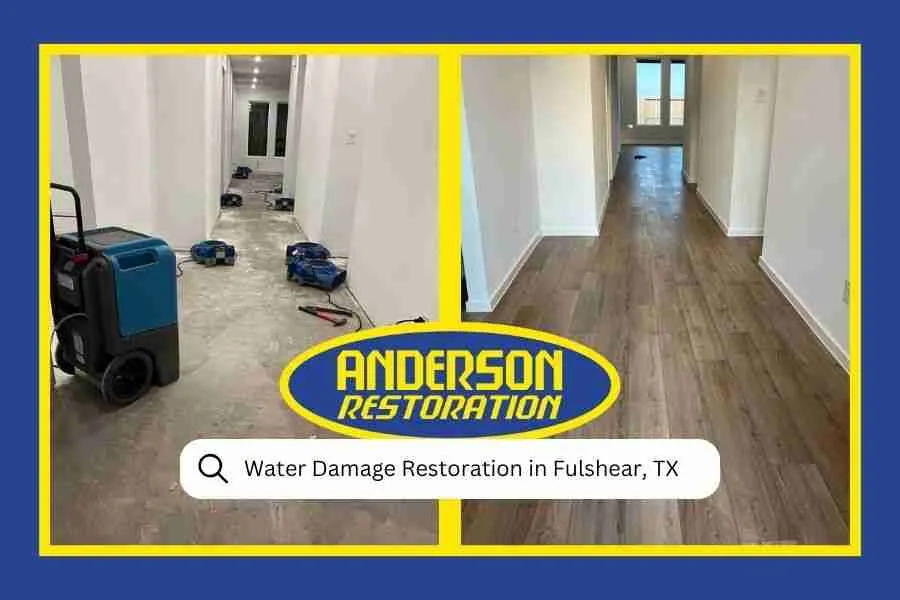
Professional dehumidification pulls water vapor out of the air so wet floors, walls, and framing can release the moisture trapped inside them. Extraction handles the water you can see. Drying handles the water you can’t, and it decides whether your home comes back clean or comes back with mold. Our team at Anderson Restoration has been doing water damage drying and dehumidification across the North and West Houston metro since 2002.
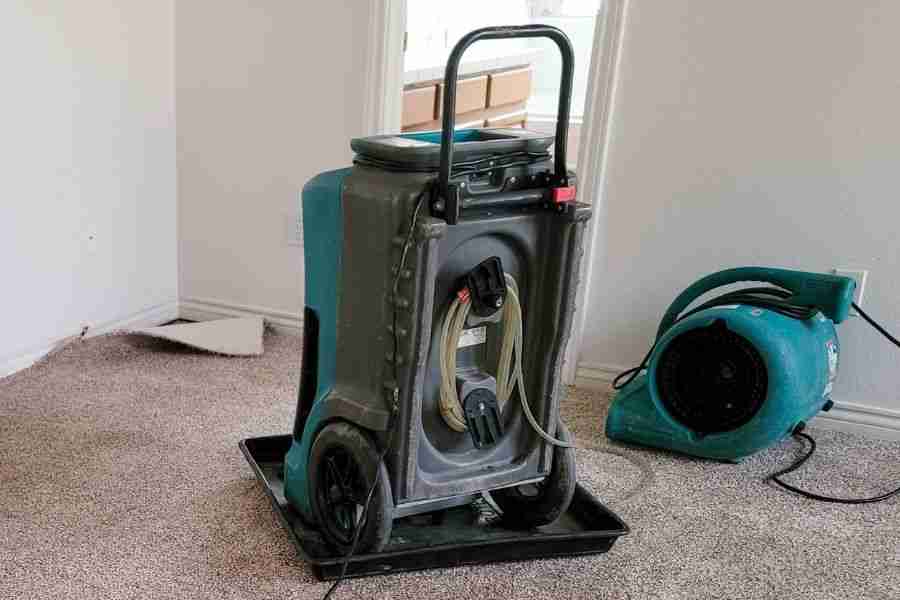
A drying setup is a system. Air movers and dehumidifiers each handle half of the job, and neither one finishes it alone.
What does a dehumidifier actually do after water damage?
A dehumidifier lowers the moisture level of the air so wet materials can let go of the water inside them. Wood and drywall only give up moisture when the air around them is drier than they are. Dry the air enough and the water moves out of the material on its own. A hose carries it off.
Inside the unit, a fan pulls damp room air across a very cold coil. The air cools past its dew point, the vapor turns back into liquid, and it drips into a pan. Warmer, drier air comes out the other side.
That warm exhaust is a bonus. It lifts the room a few degrees, which speeds up evaporation everywhere else.
Why won’t fans and open windows dry my house?
Fans move water out of your floor and into your air, and that’s where the job stops. Air movers create fast evaporation at the surface of wet materials. Without something pulling that vapor out, it drifts to the next cool surface and soaks in again. Damp closets. Sweating windows. That musty smell.
Opening the windows is worse here than almost anywhere. On a humid August afternoon in Cypress or Katy, the air outside is often wetter than the air in the damaged room. More on that in our post on whether opening windows helps with mold.
The clock matters too. The EPA guide to mold and moisture says wet materials should be dried within 24 to 48 hours, and indoor humidity should stay under 60 percent. Miss that window and you’re no longer drying a house. You’re treating one.
Every hour of delay adds materials to the tear out list. Our crew answers day and night.
Which type of dehumidifier does the job?
Most Houston homes dry fastest with a low grain refrigerant unit, while dense materials like hardwood and plaster often need a desiccant. Both remove vapor. They pull it out in different ways, and they behave differently once the air gets cold or very dry.
| Type | How it grabs moisture | Where it shines |
|---|---|---|
| Low grain refrigerant | Cold coil condenses vapor into liquid | Carpet, pad, drywall, most whole home losses |
| Desiccant | A drying wheel absorbs vapor, then vents it outside | Hardwood, plaster, crawl spaces, cool spaces |
Sizing is the other half of the call. We measure the wet space, factor in how soaked the materials are, then set the unit count from there. A hardware store rental moves a fraction of that air, which is why a home dehumidifier helps with humidity but can’t dry a flooded room.
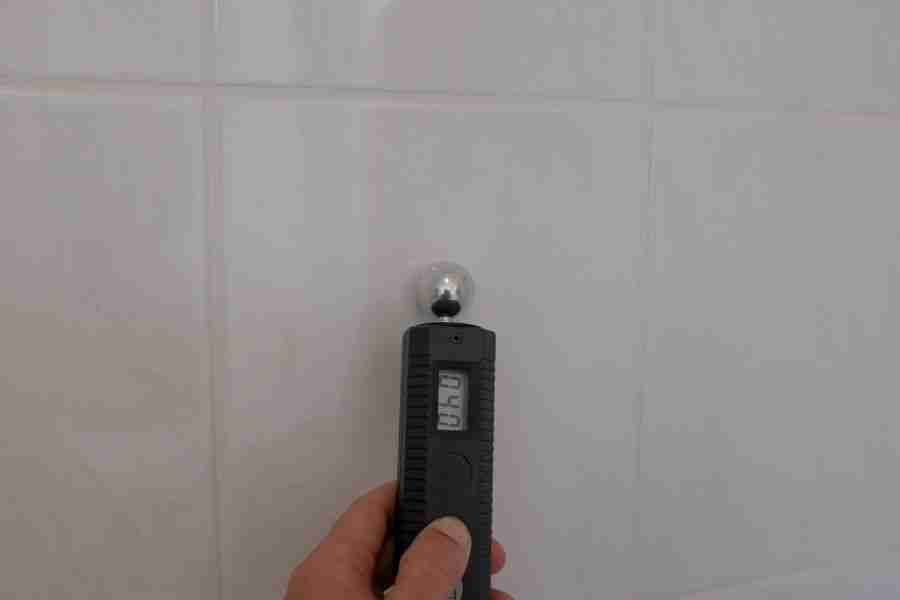
Daily readings tell us whether the plan is working or needs to change.
How do we know your home is actually dry?
We prove it with numbers, not by touching a wall and calling it good. On day one, our technicians take moisture readings from a room the water never reached. That number becomes the goal. Every wet material has to match it before the equipment leaves.
Each visit, we log the same points: moisture in the walls and floors, humidity in the room, and the air coming off each machine. Readings that stall mean something is hiding, often wet insulation or water under a cabinet toe kick.
That loop runs hour after hour, for three to five days on a typical job. Our process follows the IICRC S500 standard for water damage restoration, and our firm certification is one reason carriers accept our drying logs without a fight.
What should you do while the equipment runs?
Leave everything running and keep the house closed up. The machines are loud, and shutting them off at night is tempting. We get it. But a unit that runs 14 hours instead of 24 gives back most of the ground it gained.
- Keep exterior doors and windows shut, and run the AC.
- Leave interior doors open unless a technician sealed them.
- Leave every machine plugged in, even if you want to vacuum around it.
- Call us if a machine goes quiet or a breaker trips.
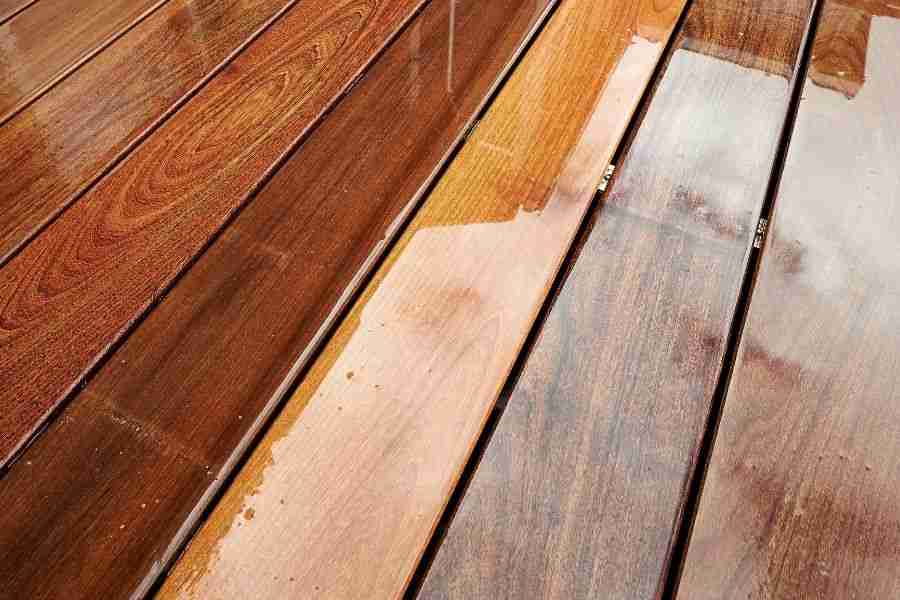
Hardwood holds moisture longer than almost anything else in the house, which is why those jobs run the longest.
Watch the smell, too. A musty odor during drying usually means moisture reached a spot the plan missed, and mold can start growing within a day or two of a leak. Tell your technician right away. If growth has started, our mold remediation crews handle it on the same job.
Anderson Restoration is a family owned, IICRC certified firm serving Cypress, Katy, Tomball, Waller, Spring, The Woodlands, and the rest of the Houston metro. Whether you need water damage restoration in Cypress or commercial water damage restoration, you get the same equipment and the same drying logs.
Frequently asked questions
How long do the dehumidifiers stay in my house?
Three to five days covers most jobs. Hardwood, plaster, and multi room losses can run a week or longer. Equipment leaves when the readings match your home’s dry standard.
Will running this equipment spike my electric bill?
You’ll see a bump that month, since the units draw power around the clock. It’s small next to replacing a floor. On a covered claim, that cost is usually built into the estimate we send your carrier.
Can I use my home dehumidifier instead?
Not for an active water loss. A store bought unit holds a comfortable humidity level in one room. It can’t pull water out of soaked framing and subfloor, so it runs nonstop and still falls behind.
Why is my floor still buckled if the readings say it’s dry?
Drying and repair are separate steps. Wood can hit its target moisture level and still be cupped or split from swelling. That material gets refinished or replaced during the rebuild phase.